
If you ask someone in Europe or North America what they think about cleaning, you’ll usually get a sigh, an eye‑roll, or a confession that they’d rather do almost anything else. Cleaning has always been one of those unavoidable chores that quietly eats away at weekends. But that’s exactly why the future of home cleaning is about to get interesting. Technology, shifting lifestyles, and new expectations are reshaping how Western households approach cleanliness — and the transformation is happening faster than most people realize.
We’re entering a new era where cleaning is less about scrubbing and more about smart systems, automation, and effortless maintenance. Let’s explore what that future looks like and why it’s already taking shape.
1. The Rise of the Autonomous Home
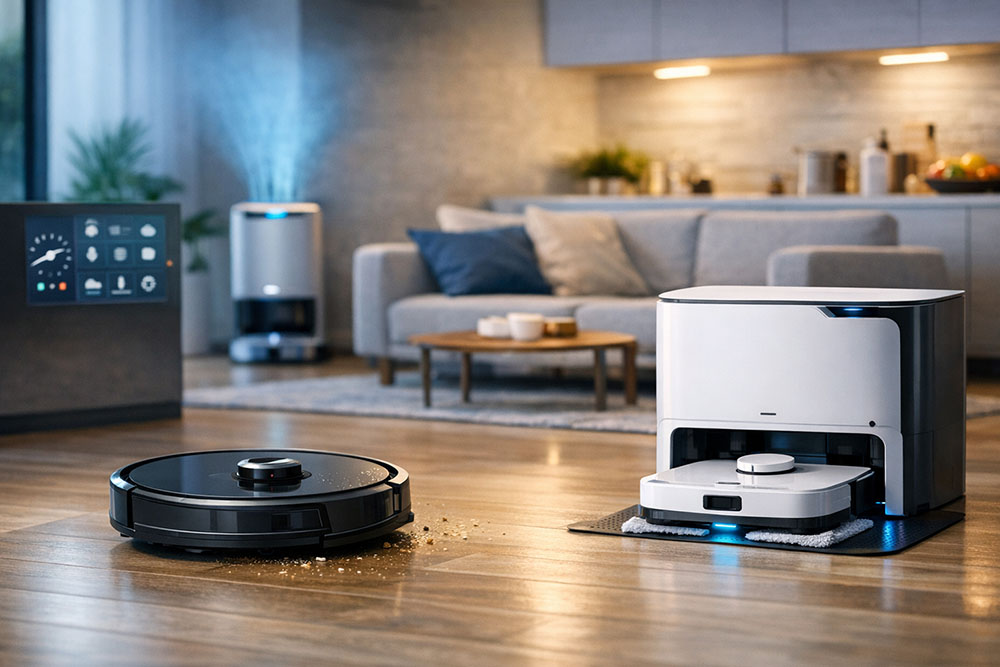
For years, robot vacuums were treated as quirky gadgets — fun to watch, but not quite reliable enough to replace traditional cleaning. That reputation is fading quickly. Modern robot vacuums map rooms with precision, empty themselves, avoid cables, mop floors, and even lift their mopping pads when they detect carpets. In Western markets, especially in the US, UK, Germany, and the Nordics, adoption is accelerating.
Why? Because the autonomous home fits perfectly with Western lifestyles:
- Dual‑income households have less time for chores
- Pet ownership is high, and pet hair is a constant battle
- Larger living spaces in North America make manual cleaning more time‑consuming
- Tech acceptance is high, especially among younger homeowners
Robot vacuums are no longer a novelty — they’re becoming the first “default” cleaning device in many homes. And this is just the beginning.
2. From Single Devices to Cleaning Ecosystems
The next stage of home cleaning isn’t about one robot — it’s about a coordinated team of robots and smart devices working together.
Imagine this scenario:
- Your robot vacuum starts cleaning automatically when you leave the house
- Your air purifier detects dust levels rising and adjusts itself
- Your smart trash bin seals and replaces its own bags
- Your laundry machine doses detergent automatically and texts you when clothes are dry
- Your dishwasher orders its own cleaning tablets when supplies run low
This isn’t science fiction. Many Western households already use at least two or three smart cleaning devices, and brands are racing to create unified ecosystems. The future home won’t just be “cleaned” — it will maintain itself.
3. The Decline of Traditional Cleaning (But Not Its Disappearance)
Let’s be honest: traditional cleaning tools aren’t going anywhere. Western consumers still rely heavily on:
- Vacuum cleaners
- Mops
- Sprays and detergents
- Microfiber cloths
But the role of these tools is shifting. Instead of being used daily or weekly, they’re becoming backup tools — used for deep cleaning or special situations.
In other words, the future isn’t “robots replacing humans.” It’s “robots handling the boring parts so humans only clean when they want to.”
4. The New Luxury: A Home That Cleans Itself
In Western culture, convenience has always been a form of luxury. That’s why services like meal kits, grocery delivery, and home automation exploded in popularity. Cleaning is following the same path.
A home that cleans itself is becoming a status symbol — not because it’s flashy, but because it gives people something far more valuable than a shiny floor: time.
Time to relax. Time to spend with family. Time to do literally anything other than vacuuming.
This emotional value is a major driver behind the adoption of smart cleaning devices.
5. Sustainability Will Shape the Next Generation of Cleaning Tech
Western consumers are increasingly eco‑conscious. The future of cleaning will reflect that:
- Biodegradable cleaning solutions
- Energy‑efficient robots
- Water‑saving mopping systems
- Longer‑lasting batteries and recyclable components
- Reduced use of harsh chemicals
Brands that combine automation with sustainability will dominate the next decade.
6. AI Will Make Cleaning Predictive, Not Reactive
Right now, cleaning is mostly reactive — you clean because something is dirty. But AI is pushing us toward predictive cleaning, where your home anticipates mess before it happens.
Future systems may:
- Detect pollen season and increase cleaning frequency
- Learn your pet’s shedding cycles
- Identify high‑traffic areas and clean them more often
- Track humidity to prevent mold
- Notify you when your home’s air quality drops
Your home will understand your habits better than you do — and clean accordingly.
7. The Human Touch Isn’t Going Away
Even with all this automation, Western households won’t completely abandon manual cleaning. There will always be:
- Spills that need immediate attention
- Deep cleaning days
- Personal preferences (some people like cleaning — shocking but true)
But the balance is shifting. The future home is one where humans do 5–10% of the cleaning, and machines handle the rest.
8. What This Means for the Next 10 Years
Here’s the big picture:
- Robot vacuums and mops will become as common as microwaves
- Smart cleaning ecosystems will replace single devices
- Cleaning will shift from “chore” to “background process”
- Homes will be healthier, cleaner, and more energy‑efficient
- Consumers will expect automation as a standard feature, not a luxury
The future of home cleaning isn’t about gadgets — it’s about freedom. Freedom from repetitive tasks, from wasted time, from the mental load of keeping a home clean.
And Western households are embracing that future faster than ever.