
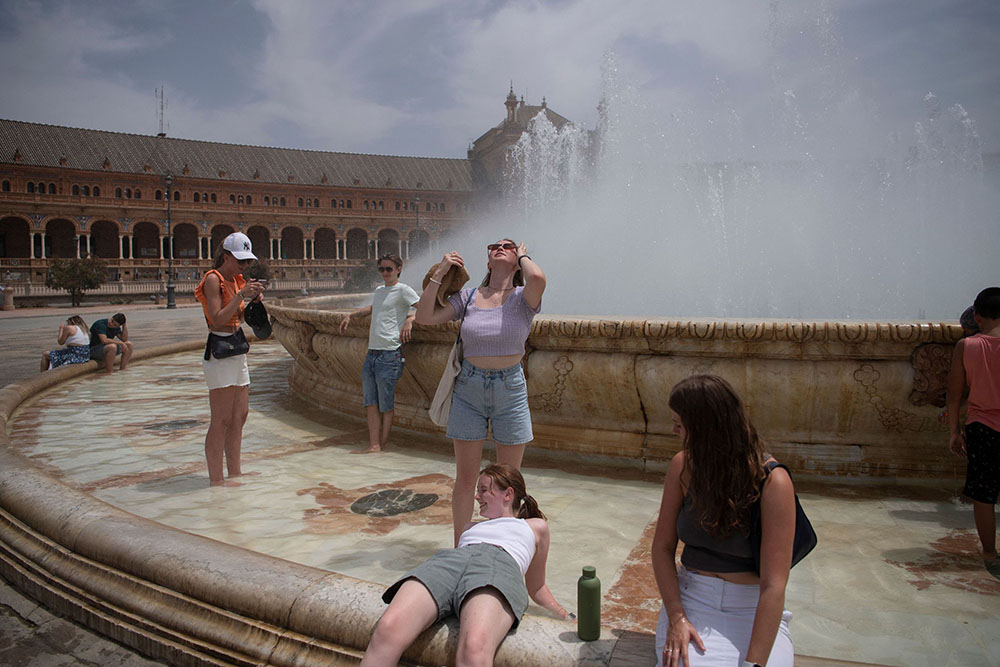
Europe’s record-breaking June heatwave has once again pushed the continent into a state of climatic urgency. With temperatures soaring above 44°C in parts of France and Spain, and the United Kingdom issuing a rare red extreme heat warning, the summer of 2026 has become a stark reminder that extreme heat is no longer an anomaly but a recurring feature of Europe’s climate reality. This essay examines the underlying causes of Europe’s intensifying heatwaves, their social and economic consequences, and the diverse ways in which citizens across different European countries are adapting to this new environmental challenge.
Rising Temperatures and the Science Behind the Heatwave
The immediate cause of the current heatwave is a persistent high-pressure system over Western Europe, trapping hot air and preventing cooler Atlantic winds from entering the region. However, the deeper explanation lies in long-term climate change. According to climate scientists, Europe is warming at twice the global average, making it particularly vulnerable to extreme heat events. The Mediterranean basin—already one of the world’s climate “hotspots”—has experienced prolonged drought, reduced soil moisture, and increasingly frequent heat domes. These conditions amplify heatwaves and make them more intense and longer-lasting.
Urbanization further exacerbates the problem. Major cities like Paris, Madrid, and London suffer from the urban heat island effect, where concrete and asphalt absorb and retain heat, pushing nighttime temperatures to dangerous levels. As a result, even after sunset, temperatures remain high enough to strain public health systems and infrastructure.
Social and Economic Consequences Across Europe
The impacts of the heatwave are felt across multiple sectors. Public health is the most immediate concern. France, Spain, and the UK have all reported heat-related deaths, particularly among the elderly, outdoor workers, and individuals with chronic illnesses. Hospitals face increased admissions for dehydration, heatstroke, and cardiovascular complications.
Infrastructure is also under pressure. Rail networks in the UK and Germany have imposed speed restrictions to prevent track deformation. Power grids across Southern Europe are strained as air-conditioning usage spikes, raising the risk of blackouts. Agriculture is suffering as well: drought conditions threaten crop yields in Spain and Italy, while livestock farmers struggle to keep animals cool and hydrated.
Economically, the heatwave disrupts productivity. Outdoor labor—construction, agriculture, transportation—slows down or halts during peak heat hours. Tourism, a major economic driver for Southern Europe, faces mixed effects: while some travelers still flock to beaches, others cancel trips due to health concerns and wildfire risks.
How Citizens in Different European Countries Are Coping
Despite the shared challenge, coping strategies vary significantly across Europe, shaped by cultural habits, infrastructure, and government preparedness.
France: Heatwave Plans and Behavioral Adaptation
France has one of Europe’s most structured responses due to lessons learned from the deadly 2003 heatwave. Citizens are accustomed to following the government’s Plan Canicule, which includes:
- Staying indoors during peak heat
- Frequent hydration
- Checking on elderly neighbors
- Using public cooling centers
French households often keep shutters closed during the day to block sunlight—a traditional but highly effective method.
Spain: Siesta Culture Reinforced by Climate Reality
Spain’s long-standing cultural practice of siesta—resting during the hottest hours—has become even more relevant. Many Spaniards avoid outdoor activity between 2 p.m. and 6 p.m., shifting work and social life to early mornings and late evenings. Communities also rely heavily on shaded public spaces, water misters, and widespread air-conditioning in public buildings.
United Kingdom: A Country Unprepared but Learning Quickly
The UK is historically unaccustomed to extreme heat, and many homes lack air-conditioning. As a result, British citizens adopt improvised strategies:
- Using fans and cold showers
- Working from home to avoid overheated public transport
- Visiting parks early in the morning instead of midday
- Following NHS heat-health alerts
The government has begun opening temporary cooling centers, but public awareness remains a work in progress.
Italy and Greece: Coping Amid Wildfire Risks
Southern Europeans are familiar with heat, but the combination of heatwaves and wildfires has forced new behaviors:
- Avoiding forested areas during high-risk periods
- Keeping emergency kits at home
- Using heavy shutters and thick stone walls in traditional homes to maintain cool interiors
Tourists, however, often underestimate the risks, leading to increased rescue operations.
Germany and Northern Europe: Infrastructure Strain and Lifestyle Adjustments
Germany, the Netherlands, and Belgium face a different challenge: their infrastructure was built for cold, not heat. Citizens cope by:
- Installing portable air-conditioning units
- Cycling or walking early in the morning
- Using lakes and rivers as natural cooling spaces
- Reducing electricity use during peak hours to avoid grid overload
These countries are rapidly adapting, but the transition is still ongoing.
A Future That Demands Adaptation and Collective Action
Europe’s extreme heatwaves are no longer isolated events—they are part of a broader climatic transformation. As temperatures continue to rise, the continent must strengthen its resilience through improved urban planning, climate-adaptive infrastructure, and public education. Citizens, too, must adjust their daily habits, drawing on both traditional practices and modern technologies.
The heatwave of 2026 is not merely a weather event; it is a warning. Europe’s future will depend on how effectively governments and individuals learn to coexist with a hotter, more unpredictable climate. The challenge is immense, but with coordinated action and cultural adaptation, the continent can navigate this new environmental reality.
How Should Europeans Respond to the Record-Breaking 2026 Heatwave?