
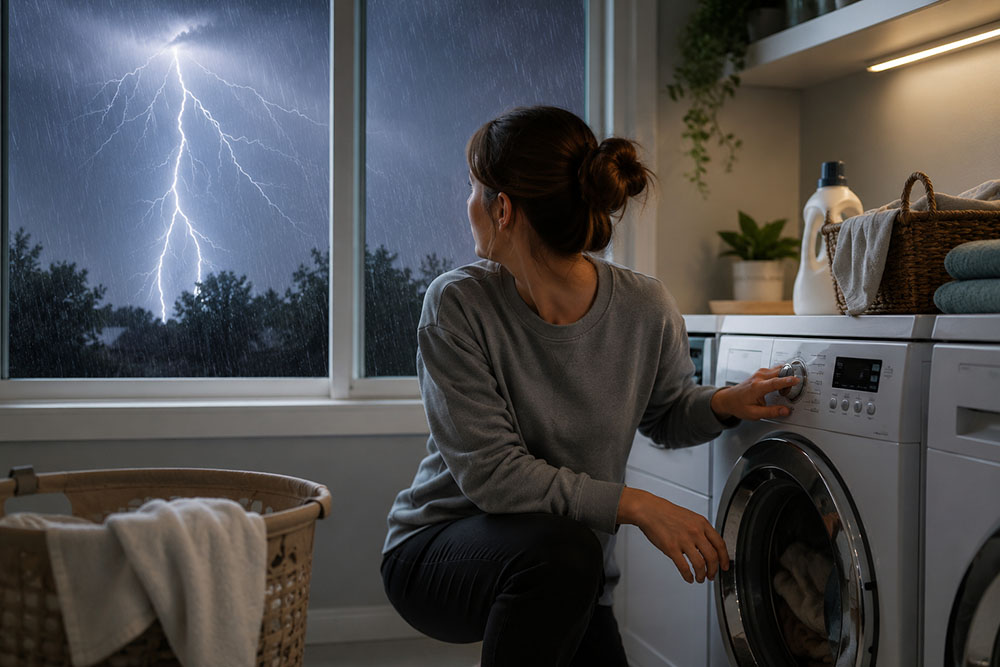
A summer thunderstorm can arrive with little warning. One minute the sun is shining, and the next the sky is filled with dark clouds, heavy rain, and flashes of lightning.
For some people, a storm is just another part of the day. For others, it means putting off certain household chores—including doing the laundry.
If you've ever heard someone say you shouldn't use the washing machine during a thunderstorm, you might have wondered whether it's an old wives' tale or advice worth taking seriously.
The answer is a little more nuanced than a simple yes or no.
The Concern Isn't the Washing Machine Itself
Many people assume that washing clothes during a thunderstorm is dangerous because of the water involved.
In reality, that's usually not the main issue.
The bigger concern is lightning and the power surges it can create.
A nearby lightning strike can send a sudden surge of electricity through power lines. While modern electrical systems include safety features, powerful surges can still damage electronic devices and household appliances in some situations.
Because washing machines are connected to both electricity and plumbing, they're often included on the list of appliances people avoid using during severe storms.
Power Surges Can Affect More Than Laundry
Lightning doesn't need to strike your home directly to cause problems.
In some cases, electrical surges can travel through utility lines after a nearby strike, potentially affecting televisions, computers, routers, kitchen appliances, and other electronics.
While serious damage is relatively uncommon, it can happen—especially in areas that experience frequent thunderstorms or homes without surge protection.
That's one reason some homeowners prefer to postpone running major appliances until the storm has passed.
What About Modern Homes?
Today's homes are generally much better protected than those built decades ago.
Many electrical systems include grounding, circuit breakers, and other safety features designed to reduce the impact of electrical faults. Some homeowners also install whole-house surge protectors or use surge-protected outlets for valuable electronics.
These improvements significantly reduce everyday electrical risks, but they don't eliminate them entirely.
During particularly intense thunderstorms, experts often recommend limiting the use of plugged-in appliances whenever practical.
Outdoor Drying Can Bring Its Own Problems
Not everyone uses a clothes dryer.
If you normally hang laundry outside, a thunderstorm creates a different set of challenges.
Heavy rain can quickly soak freshly washed clothes, strong winds may blow lightweight items off the line, and high humidity makes drying much slower even after the rain ends.
Waiting for clearer weather is often the easier—and less frustrating—choice.
Is It Always Necessary to Wait?
Not necessarily.
If the storm is distant, your home has modern electrical protection, and there's no severe weather warning in effect, many people continue using household appliances without experiencing any problems.
However, if lightning is frequent, thunder is close, or the storm is particularly severe, delaying non-essential chores for a short time is often a sensible precaution.
Laundry can usually wait another hour.
Replacing damaged appliances is far less convenient.
Simple Ways to Reduce the Risk
You don't need to stop your entire routine every time clouds appear.
Instead, a few practical habits can help reduce potential risks during severe weather:
- Avoid starting large appliance cycles if lightning is already nearby.
- Use quality surge protection for valuable electronics whenever possible.
- Unplug sensitive devices if a severe storm is expected and it's safe to do so before the storm arrives.
- Wait until the thunderstorm has moved away before using outdoor electrical equipment.
These small precautions are easy to follow and don't require major changes to your daily routine.
A Little Patience Can Go a Long Way
Most thunderstorms pass surprisingly quickly.
Waiting until the rain eases and the lightning moves farther away may only delay your laundry by a short time, but it can provide extra peace of mind—especially in regions where summer storms are frequent.
The important thing isn't avoiding laundry forever whenever rain appears. It's understanding the difference between an ordinary shower and a thunderstorm with active lightning.
In the end, doing laundry during a thunderstorm isn't automatically dangerous, and many people never encounter any issues. Still, knowing why some people choose to wait can help you make an informed decision based on the weather, your home, and your own level of comfort.
Sometimes, the safest choice is simply letting the storm pass before pressing the start button.