
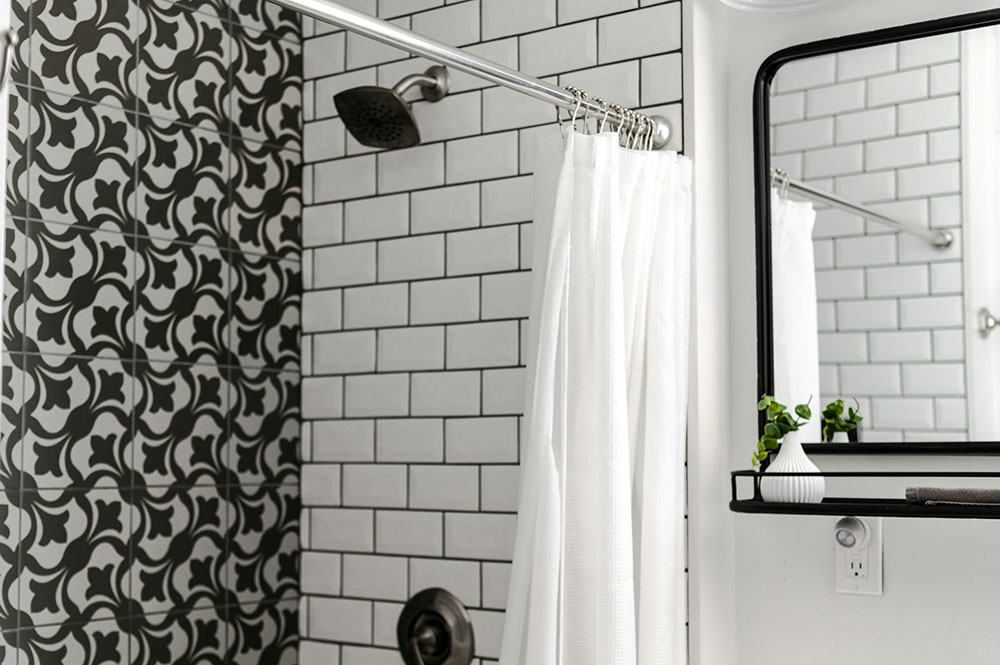
Most people never think about their shower curtain.
It serves a simple purpose. You pull it closed before a shower, step out when you're done, and move on with your day.
Yet a surprisingly common debate exists in bathrooms everywhere:
Should the shower curtain remain open or closed after a shower?
Some people pull it completely open because it makes the bathroom look cleaner and more spacious.
Others leave it fully closed because they've heard it helps the curtain dry more effectively.
Who's right?
As it turns out, the answer has less to do with appearance and more to do with moisture.
Why This Small Habit Matters
At first glance, a shower curtain seems insignificant.
But bathrooms create a unique environment.
Every hot shower introduces:
- Moisture
- Steam
- Condensation
- Humidity
After the shower ends, all that moisture has to go somewhere.
If damp surfaces stay wet for too long, conditions become more favorable for mildew, unpleasant odors, and extra cleaning work.
That's why even small bathroom habits can have surprisingly large effects over time.
What Happens When the Curtain Stays Closed?
Many people assume a closed curtain is the logical choice.
After all, if the curtain hangs straight, shouldn't it dry evenly?
In many cases, yes.
A fully extended curtain exposes more of its surface to air, reducing the chances that damp folds remain trapped against each other.
When a curtain is bunched together, moisture can become concentrated in the folds.
Those damp areas may stay wet for much longer than the exposed sections.
The result?
A greater chance of stubborn mildew spots appearing over time.
From a purely drying perspective, keeping the curtain extended is often the better option.
What Happens When the Curtain Is Pushed Open?
Opening the curtain completely often makes the bathroom look larger and tidier.
Hotels frequently do this.
Many homeowners prefer the appearance as well.
The downside is that some curtains end up folded tightly to one side.
When several wet sections of fabric or liner remain pressed together, airflow becomes limited.
Moisture has a harder time escaping.
The curtain may still dry eventually, but the process often takes longer.
The issue isn't whether the curtain is open.
The issue is whether it's spread out.
Airflow Is the Real Answer
The most useful way to think about the question is this:
It's not really an open-versus-closed debate.
It's an airflow debate.
The goal is allowing as much of the wet surface as possible to dry efficiently.
That means avoiding situations where damp material remains tightly folded or compressed.
A curtain that hangs fully extended generally dries faster than one gathered into a small area.
Many cleaning professionals focus less on the curtain's position and more on whether moisture can escape.
Why Mold Loves Bathrooms
Bathrooms naturally create ideal conditions for mold and mildew.
Think about what happens every day:
- Warm temperatures
- Frequent moisture
- Limited airflow
- Repeated exposure to water
These conditions make bathrooms one of the most challenging rooms in a home to keep completely dry.
Even if a curtain appears clean, trapped moisture can gradually encourage mildew growth along the bottom edge or in folded sections.
That's why prevention is often easier than cleaning.
Ventilation Matters Even More
The truth is that your bathroom fan may be more important than your shower curtain position.
Good ventilation helps remove moisture from the entire room.
A bathroom with excellent airflow can often tolerate less-than-perfect curtain habits.
A poorly ventilated bathroom may struggle regardless of what you do with the curtain.
Simple habits that help include:
- Using the exhaust fan during and after showers
- Opening a window when possible
- Allowing damp surfaces to dry fully
- Reducing unnecessary moisture buildup
The curtain is only one part of a larger system.
Small Habits Reduce Major Cleaning
One of the most interesting things about cleaning is that major problems often begin with tiny habits.
People frequently assume cleanliness is determined by occasional deep-cleaning sessions.
In reality, daily habits often matter more.
A few seconds spent helping a curtain dry properly may save:
- Additional cleaning
- Mold removal
- Liner replacement
- Unpleasant odors
over the long term.
The most effective cleaning strategy is often preventing problems before they begin.
So What's the Best Choice?
If the goal is reducing moisture and helping your shower curtain dry efficiently, the best approach is usually to leave it extended rather than bunched together.
Whether that means fully closed across the tub or positioned in a way that maximizes airflow depends on the bathroom layout.
The important part is simple:
Don't leave a wet curtain compressed in a tight fold.
A curtain that can dry completely is less likely to develop mildew, odors, and buildup over time.
The Best Bathroom Habits Are Often the Simplest
Many people spend time researching expensive cleaning products, advanced bathroom upgrades, and complicated maintenance routines.
Yet some of the most effective habits cost nothing at all.
The shower curtain is a perfect example.
It's a small decision.
It takes only a few seconds.
Most people never think about it.
And yet that tiny habit can influence how clean, fresh, and low-maintenance a bathroom feels in the weeks and months ahead.
What Do You Normally Do With Your Shower Curtain After a Shower?