
In recent years, vegetarianism has moved from the margins of society into the mainstream. Across the United States and many other countries, more people are choosing to adopt plant-based diets, motivated by health concerns, environmental awareness, ethical considerations, and cultural shifts. Yet becoming a vegetarian is rarely an overnight decision. It is a transformation process that involves several stages, each marked by challenges, discomforts, and opportunities for growth. Understanding why people make this change, what stages they go through, and how they can ease the difficulties along the way provides valuable insight into one of the most significant lifestyle shifts of our time.
Why More People Are Becoming Vegetarians
- Health Benefits
- Scientific studies increasingly show that plant-based diets reduce the risk of heart disease, obesity, diabetes, and certain cancers.
- Many individuals turn to vegetarianism after experiencing health issues or simply wanting to improve their overall well-being.
- Environmental Concerns
- Meat production is resource-intensive, requiring vast amounts of water, land, and energy.
- Livestock farming contributes significantly to greenhouse gas emissions. Choosing vegetarianism is seen as a way to reduce one’s ecological footprint.
- Ethical and Animal Welfare Reasons
- Growing awareness of factory farming practices has led many to reject meat consumption.
- For some, vegetarianism is a moral stance against animal suffering.
- Cultural and Social Influence
- Vegetarianism is increasingly normalized, with restaurants, supermarkets, and media promoting plant-based options.
- Social networks and communities provide support, making the transition easier and more appealing.
The Stages of Transition
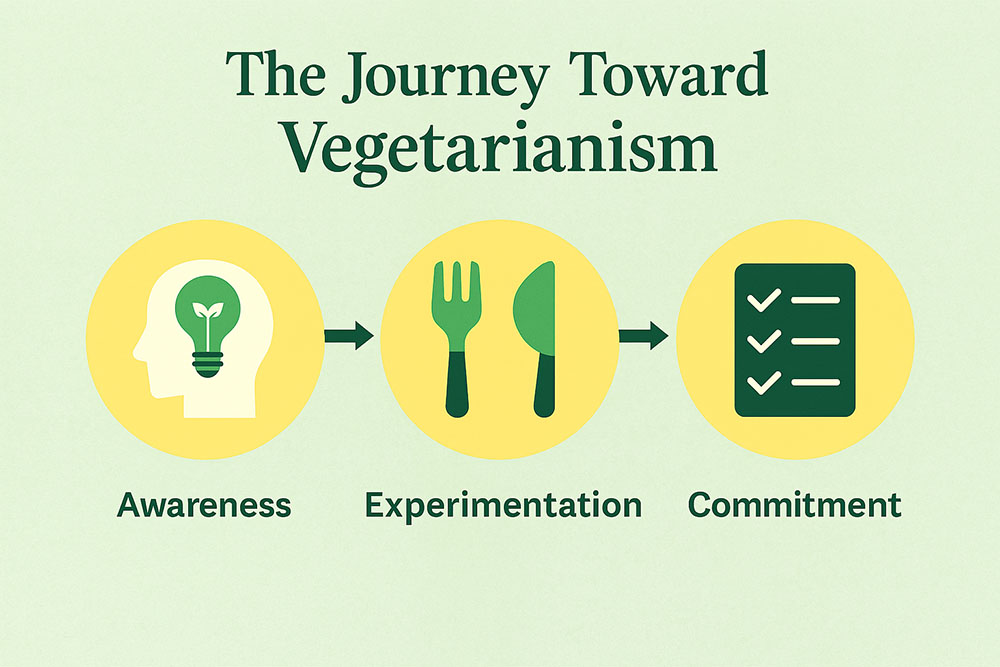
The journey toward vegetarianism often unfolds in distinct phases. While each person’s path is unique, most experience a progression that can be described in four main stages:
1. Awareness and Motivation
- At this stage, individuals begin questioning their current diet. They may read articles, watch documentaries, or hear stories from friends.
- The motivation could be health-related, ethical, or environmental.
- Challenges: Cognitive dissonance arises when people realize their values conflict with their eating habits. This can cause guilt or confusion.
- How to Ease It: Education is key. Reading credible sources, joining vegetarian forums, and talking to experienced vegetarians can help clarify goals and reduce uncertainty.
2. Experimentation and Gradual Reduction
- People start reducing meat consumption, perhaps by adopting “Meatless Mondays” or trying vegetarian meals a few times a week.
- They experiment with plant-based recipes, meat substitutes, and new cuisines.
- Challenges: Cravings for familiar foods, social pressure from family or peers, and difficulty finding satisfying alternatives.
- How to Ease It: Focus on variety and flavor. Using spices, herbs, and global cuisines can make vegetarian meals exciting. Planning meals ahead also prevents frustration.
3. Commitment and Adjustment
- At this stage, individuals formally commit to a vegetarian lifestyle. They stop buying meat and identify themselves as vegetarians.
- Challenges: Nutritional concerns may arise, such as ensuring adequate protein, iron, and vitamin B12 intake. Social situations—like dining out or attending family gatherings—can also be stressful.
- How to Ease It: Consulting nutritionists, learning about balanced vegetarian diets, and preparing to explain dietary choices politely in social contexts can reduce discomfort. Supplements may be necessary for certain nutrients.
4. Integration and Identity
- Vegetarianism becomes part of one’s identity and daily routine. The diet feels natural rather than restrictive.
- Challenges: Occasional nostalgia for old foods or frustration with limited options in certain settings.
- How to Ease It: Embracing the broader vegetarian community, celebrating milestones, and focusing on the positive impact of the lifestyle help sustain motivation.
Common Difficulties and How to Overcome Them
- Physical Discomfort: Some people experience digestive changes or energy fluctuations when shifting diets.
- Solution: Transition gradually, increase fiber intake slowly, and stay hydrated.
- Social Resistance: Friends or family may question or criticize the choice.
- Solution: Communicate openly, share reasons respectfully, and sometimes prepare vegetarian dishes for gatherings to demonstrate how enjoyable they can be.
- Cravings and Habits: Long-standing habits are hard to break, and cravings for meat may persist.
- Solution: Use plant-based substitutes, focus on favorite vegetarian dishes, and remind oneself of the motivations behind the change.
- Nutritional Concerns: Fear of deficiencies can cause anxiety.
- Solution: Learn about nutrient-rich foods like legumes, nuts, seeds, leafy greens, and fortified products. Seek professional guidance if needed.
The Broader Impact
The transformation to vegetarianism is not only personal but also collective. As more individuals make the switch, demand for plant-based products grows, encouraging innovation in food industries. Restaurants expand their menus, supermarkets diversify their offerings, and governments begin to recognize the environmental benefits of plant-based diets. Each person’s journey contributes to a larger cultural shift toward sustainability and compassion.
From Plate to Purpose
Becoming a vegetarian is a profound lifestyle change that unfolds through stages of awareness, experimentation, commitment, and integration. Each stage presents challenges—whether physical, social, or emotional—but these can be managed with education, planning, and support. The growing popularity of vegetarianism reflects a society increasingly concerned with health, ethics, and the environment. While the journey may involve discomfort, the rewards—improved well-being, reduced ecological impact, and alignment with personal values—make the transformation worthwhile.
Ultimately, vegetarianism is not just about what people eat; it is about how they live, what they value, and the kind of world they want to help create.