
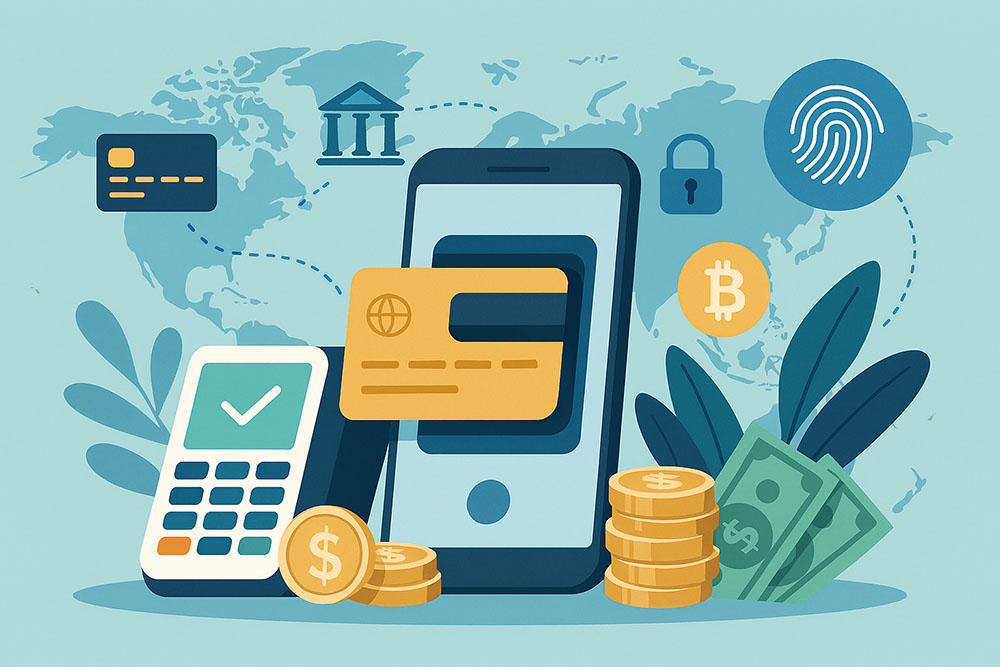
The global online payments landscape has undergone a profound transformation over the past decade, driven by rapid digitization, evolving consumer habits, and the rise of new financial technologies. Today’s payment ecosystem is no longer defined by a single dominant method but by a diverse mix of cards, digital wallets, bank‑based transfers, and emerging real‑time payment systems. As digital commerce continues to expand, understanding how payment preferences differ across regions—and how they are likely to evolve—is essential for businesses operating internationally.
Regional Differences in Payment Habits
Online payment behavior varies significantly across regions due to cultural norms, banking infrastructure, regulatory environments, and the maturity of digital ecosystems.
North America
North America remains one of the most card‑centric markets in the world. Credit cards account for a substantial share of online transactions, supported by strong consumer trust in card networks and widespread rewards programs. Digital wallets such as Apple Pay, Google Pay, and PayPal have grown rapidly, especially on mobile devices, but they still complement rather than replace card usage. Buy Now, Pay Later (BNPL) services like Affirm and Klarna have also gained traction among younger consumers.
Europe
Europe presents a more fragmented landscape. While cards remain important, many countries rely heavily on local payment schemes. For example, the Netherlands favors iDEAL, a bank‑based transfer system, while Germany has a strong preference for invoice payments and direct debit. Digital wallets are expanding, but adoption varies widely by country. The region’s regulatory environment, particularly PSD2 and open banking initiatives, has accelerated the growth of account‑to‑account (A2A) payments and real‑time bank transfers. Reports indicate that real‑time A2A networks are becoming a major driver of global payment growth.
Asia-Pacific
Asia-Pacific is the fastest‑growing digital payments market, driven by mobile-first economies and super‑app ecosystems. In China, Alipay and WeChat Pay dominate, while India’s UPI has become one of the world’s most successful real‑time payment systems. Southeast Asia shows strong adoption of mobile wallets due to limited credit card penetration. The region’s growth is also influenced by rapid fintech innovation and government-backed digital payment initiatives.
Latin America
Latin America has seen a surge in digital wallet adoption, largely due to financial inclusion efforts and the popularity of platforms like Mercado Pago and Pix in Brazil. Credit card penetration is lower than in North America, making alternative payment methods essential for e-commerce growth.
Middle East and Africa
These regions are experiencing accelerated digital payment adoption, driven by mobile money systems, government modernization programs, and increasing smartphone penetration. Cash remains important in some markets, but digital wallets and bank transfer systems are expanding quickly.
Global Market Share Trends
Although exact percentages vary by source and region, several broad patterns are consistent across global payment reports:
- Cards (credit and debit) remain the single largest category globally, especially in North America and parts of Europe.
- Digital wallets are the fastest‑growing method worldwide, driven by mobile commerce and platform integration. Digital payments overall continue to rise globally, with fintech innovation accelerating adoption.
- Bank transfers and A2A payments are gaining momentum due to open banking and real‑time payment infrastructure.
- BNPL services are expanding rapidly, especially in Europe and North America.
- Cash usage continues to decline in online commerce, though it remains relevant in certain emerging markets.
These shifts reflect a broader trend toward convenience, speed, and integrated digital experiences.
Future Trends Shaping Global Payments
The next decade will bring even more dramatic changes to the payments ecosystem. Several major trends are already reshaping the industry:
1. Real‑time and account‑to‑account payments
Real‑time A2A networks are becoming a major engine of global payment growth, offering faster settlement and lower costs compared to card networks. Countries like India, Brazil, and the EU are leading this shift, and more markets are expected to follow.
2. Digital currencies and tokenized payments
Digital currencies—including central bank digital currencies (CBDCs) and tokenized assets—are entering the mainstream. Reports highlight that digital assets and programmable money are becoming increasingly relevant in global payment systems.
3. AI‑driven payment optimization
AI is transforming fraud detection, risk scoring, and payment routing. Advanced AI systems are expected to rewrite the rules of payment processing, improving efficiency and reducing costs.
4. Platform‑based payment ecosystems
Super‑apps, marketplaces, and embedded finance solutions are integrating payments directly into user experiences. Software platforms are capturing a growing share of payment revenues as they expand their capabilities.
5. Sustainability and ESG considerations
Environmental and social governance factors are influencing payment providers, especially in Europe. Sustainable fintech solutions and green finance initiatives are becoming more prominent.
Security and Regulatory Challenges
As digital payments grow, so do concerns around security, fraud, and compliance. The global payment security market is expanding rapidly, driven by the need to protect consumer data and counter increasingly sophisticated cyber threats. The market was valued at over USD 23 billion in 2022 and is projected to grow at nearly 14% annually through 2030.
Key challenges include:
- Fraud and cybercrime: Attackers are using advanced techniques to target online transactions, requiring stronger authentication and real‑time monitoring.
- Data privacy regulations: Laws such as GDPR, PSD2, and other regional frameworks impose strict requirements on data handling and security.
- Cross‑border compliance: Geopolitical shifts and sanctions regimes complicate international payment flows, requiring robust compliance systems.
- AI regulation: As AI becomes central to payment processing, new regulations such as the EU’s AI Act will shape how payment providers deploy automated systems.
These challenges highlight the need for continuous investment in security infrastructure and regulatory compliance.
Where Global Payments Are Heading
The global online payments ecosystem is more dynamic and diverse than ever before. Regional habits—from North America’s card dominance to Asia’s mobile wallet ecosystems—shape how consumers transact online. Market share trends show digital wallets and real‑time payments rapidly gaining ground, while emerging technologies such as digital currencies and AI promise to redefine the future of payments.
At the same time, rising security threats and evolving regulatory frameworks require businesses to stay vigilant and adaptable. Companies that understand regional preferences, invest in secure and compliant payment systems, and embrace new technologies will be best positioned to succeed in the next era of global commerce.
Which Online Payment Method Do You Prefer for International Purchases?