
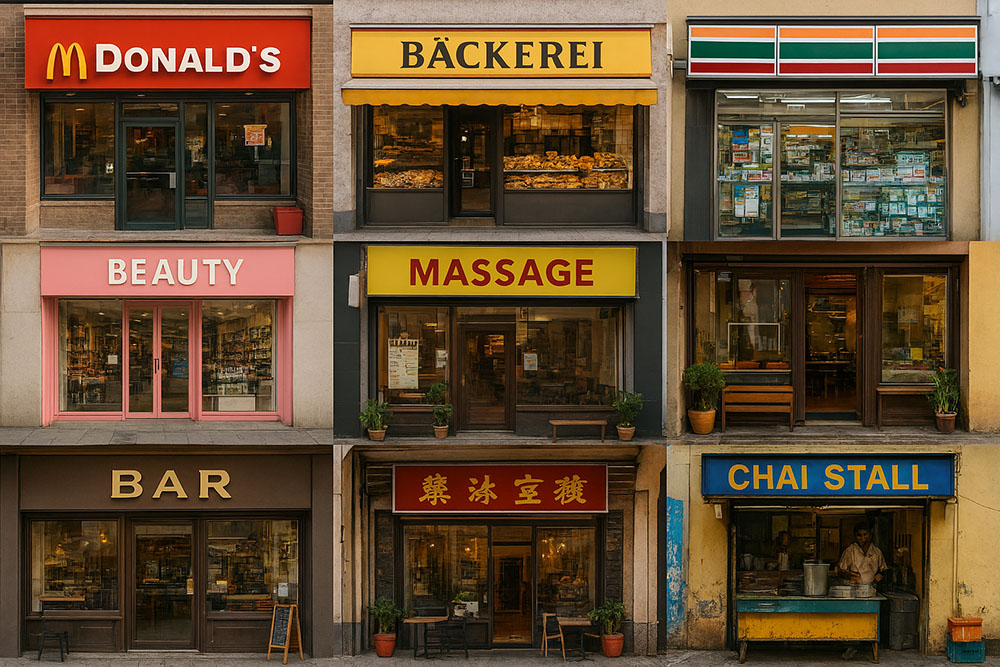
If you travel around the world with your eyes open, you’ll notice something fascinating: every country has a certain type of shop that appears so frequently, it almost becomes part of the landscape. These shops are more than just businesses—they’re cultural symbols, reflections of daily habits, and tiny windows into what people value most. From the United States to Japan, from Germany to Thailand, the streets quietly tell stories about the people who walk them.
Let’s take a little trip and explore what each country seems to have “every few steps,” and what these patterns reveal about their culture.
🇺🇸 United States: Fast‑Food Restaurants — Convenience as a Lifestyle
In the United States, you can barely drive a mile without seeing a fast‑food sign glowing in the distance. McDonald’s, Burger King, Taco Bell, Chick‑fil‑A—these chains are everywhere. It’s not just about food; it’s about speed, convenience, and predictability.
America’s fast‑food density reflects a culture built around busy schedules, long commutes, and a preference for efficiency. People want meals that are quick, affordable, and consistent. Whether you’re in New York or a small town in Kansas, a familiar menu offers a sense of comfort. Fast food is the American way of saying, “Life is fast—your meal should be too.”
🇩🇪 Germany: Bakeries — Bread as a Cultural Identity
Walk through any German town, and you’ll smell fresh bread before you see the bakery. Germany has more than 3,000 types of bread, and bakeries (Bäckereien) are everywhere. They’re not just shops—they’re morning rituals.
The abundance of bakeries reflects Germany’s deep respect for craftsmanship and tradition. Bread isn’t a side dish; it’s a cultural treasure. People stop by their local bakery every morning for fresh rolls, and many families have a favorite shop they’ve visited for years. In Germany, bread is not fast food—it’s heritage.
🇯🇵 Japan: Convenience Stores — The Art of Everyday Efficiency
Japan’s convenience stores, or konbini, are legendary. 7‑Eleven, Lawson, FamilyMart—they appear on almost every corner. But calling them “convenience stores” feels like an understatement. They’re mini‑universes where you can buy dinner, pay bills, print documents, ship packages, or grab a perfectly soft-boiled egg at 2 a.m.
The density of konbini reflects Japan’s culture of precision, reliability, and service. Life in Japan is fast-paced but orderly, and people expect things to “just work.” Konbini are designed to solve problems quickly and politely. They’re the physical embodiment of Japanese efficiency.
🇰🇷 South Korea: Beauty Stores — Appearance as Social Expression
In South Korea, you can walk down a single street and pass three or four beauty shops—Innisfree, Etude House, Olive Young, and countless independent brands. Skincare and cosmetics are everywhere.
This reflects a culture where appearance is closely tied to confidence, professionalism, and social interaction. Korean society places high value on self‑presentation, and beauty routines are seen as self‑care rather than vanity. The popularity of K‑pop and K‑dramas has also fueled a booming beauty industry. In Korea, beauty stores aren’t just shops—they’re cultural hubs.
🇹🇭 Thailand: Massage Shops — Relaxation as a Way of Life
In Thailand, especially in cities like Bangkok and Chiang Mai, massage shops appear as frequently as cafés do in other countries. “Thai Massage,” “Foot Massage,” “Aroma Therapy”—the signs are everywhere.
This abundance reflects Thailand’s cultural emphasis on relaxation, hospitality, and holistic well‑being. Massage is not a luxury; it’s part of everyday life. Locals and tourists alike see it as a way to reset the body and mind. Thailand’s massage culture is a reminder that slowing down is just as important as speeding up.
🇮🇹 Italy: Espresso Bars — Coffee as a Social Ritual
In Italy, you don’t walk into a café to sit for an hour—you walk into a bar to stand, drink a quick espresso, exchange a few words, and continue your day. These bars are everywhere, from big cities to tiny villages.
The density of espresso bars reflects Italy’s love for social connection and simple pleasures. Coffee isn’t about caffeine; it’s about community. Italians drink espresso the way others breathe—frequently, naturally, and with passion.
🇨🇳 China: Milk Tea Shops — Youth Culture in a Cup
In modern Chinese cities, milk tea shops are as common as streetlights. Brands like HeyTea, Nayuki, and countless local chains compete fiercely, and new flavors appear every season.
This trend reflects China’s young, fast‑changing urban culture. Milk tea is social, customizable, and fun—perfect for a generation that values individuality and convenience. It’s also a symbol of the booming consumer market and the creativity of Chinese food culture.
🇮🇳 India: Chai Stalls — Community in a Cup
In India, chai stalls are everywhere. They’re small, simple, and always busy. People gather around them to drink sweet, spiced tea and chat about life, politics, or cricket.
Chai stalls reflect India’s love for community and conversation. Tea isn’t just a drink—it’s a social glue. These stalls are places where strangers become friends and where daily life slows down for a moment of warmth.
What These Shops Reveal About Culture
When you look at these countries side by side, a pattern emerges:
- America values speed and convenience.
- Germany values tradition and craftsmanship.
- Japan values efficiency and reliability.
- Korea values appearance and self‑expression.
- Thailand values relaxation and well‑being.
- Italy values social connection and simple pleasures.
- China values youth culture and innovation.
- India values community and conversation.
The shops we see every few steps aren’t random—they’re reflections of what people care about, how they live, and what makes them feel at home.