
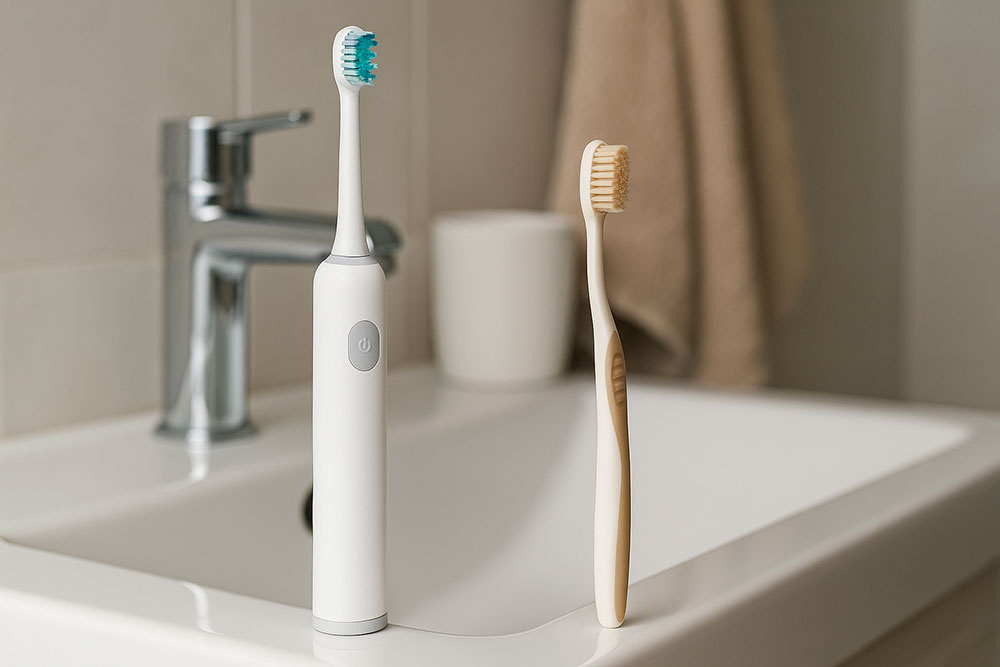
For something we use every single day, toothbrushes rarely get the attention they deserve. Most people grab whichever brush is closest at hand, give their teeth a quick scrub, and rush out the door. Yet the choice between an electric toothbrush and a manual toothbrush can shape long‑term oral health more than we realize. This isn’t just a debate among dentists — it’s a decision that plays out in real homes, busy mornings, and late‑night routines.
This article explores the differences between electric and manual toothbrushes through real‑life examples and looks at current market data to understand how consumers are choosing between the two.
1. A Tale of Two Mornings: Real‑Life Scenarios
Scenario 1: Sarah, the Busy Professional
Sarah works long hours in finance. Her mornings are a race against time — coffee, emails, and a quick breakfast before she rushes to the office. For years, she used a manual toothbrush because it was cheap and easy to replace. But she often brushed too quickly and too hard, leading to gum sensitivity.
After switching to an electric toothbrush, she noticed something surprising:
- The built‑in timer forced her to brush for the full two minutes.
- The pressure sensor stopped her from brushing too aggressively.
- Her dentist commented that her plaque levels had noticeably decreased.
For someone like Sarah, the electric toothbrush didn’t just clean better — it improved her habits.
Scenario 2: Tom, the College Student
Tom is on a tight budget. He shares an apartment with two roommates and tries to keep his expenses low. For him, a manual toothbrush is the obvious choice. It costs little, requires no charging, and can be bought anywhere.
Tom brushes twice a day and maintains good technique because he learned proper brushing habits as a child. His dentist says his oral hygiene is excellent. For people like Tom, a manual toothbrush works perfectly well — as long as they use it correctly and consistently.
Scenario 3: Linda, the Parent of Two Kids
Linda has two children, ages 6 and 9. Getting them to brush their teeth used to be a daily struggle. They would brush for 20 seconds and declare themselves “done.”
Then she bought them colorful electric toothbrushes with music timers. Suddenly brushing became fun.
- The kids brushed longer.
- They reached more areas of the mouth.
- Their dentist visits became smoother.
For families with young children, electric toothbrushes can be a game‑changer.
2. Cleaning Performance: What Studies and Dentists Say
Dentists generally agree on one thing: both electric and manual toothbrushes can clean teeth effectively — but only when used properly.
Electric Toothbrush Advantages
- Oscillating or sonic movements remove more plaque with less effort.
- Built‑in timers ensure proper brushing duration.
- Pressure sensors prevent gum damage.
- Great for people with limited mobility (e.g., arthritis).
Manual Toothbrush Advantages
- Affordable and widely available.
- Easy to travel with — no chargers needed.
- Full control over brushing technique.
- Eco‑friendly options available (e.g., bamboo brushes).
The real difference often lies not in the tool, but in the user’s habits.
3. Market Share: What Big Data Shows
Based on recent global market research:
- The global electric and manual toothbrush market was valued at around USD 10.6 billion in 2023, and is projected to grow significantly by 2033.
- Electric toothbrushes are gaining popularity due to rising awareness of oral hygiene and technological improvements.
- Manual toothbrushes still dominate in terms of total units sold because they are cheaper and more accessible.
Although exact percentages vary by region, industry reports consistently show:
Estimated Global Market Share (by revenue)
| Type | Approx. Market Share | Notes |
| Electric Toothbrushes | ~40–45% | Growing rapidly due to tech features and consumer awareness |
| Manual Toothbrushes | ~55–60% | Still dominant due to low cost and high accessibility |
4. Cost Comparison in Real Life
Electric Toothbrush
- Higher upfront cost
- Replacement heads can be expensive
- Long‑term investment in better oral health
Manual Toothbrush
- Very low cost
- Needs frequent replacement
- No charging or maintenance
For many households, the decision comes down to budget and lifestyle.
5. Environmental Considerations
Manual toothbrushes (especially plastic ones) contribute significantly to landfill waste. However, eco‑friendly bamboo options are becoming more popular.
Electric toothbrushes last longer, but their plastic components and batteries make recycling more complex.
Consumers increasingly consider sustainability when choosing between the two.
6. Which One Should You Choose?
There is no universal answer — it depends on your habits, budget, and lifestyle.
Choose an Electric Toothbrush if:
- You want maximum cleaning efficiency with minimal effort.
- You tend to brush too hard or too quickly.
- You enjoy tech‑assisted routines.
- You have children who need motivation.
Choose a Manual Toothbrush if:
- You’re on a budget.
- You travel frequently.
- You already have excellent brushing technique.
- You prefer a simple, low‑maintenance tool.
7. Choosing the Right Brush for Your Everyday Life
The electric vs. manual toothbrush debate isn’t about which one is “better” — it’s about which one fits your life. For some, an electric toothbrush transforms their oral hygiene routine. For others, a manual brush is more than enough.
What matters most is consistency: brushing twice a day, using proper technique, and visiting the dentist regularly.