
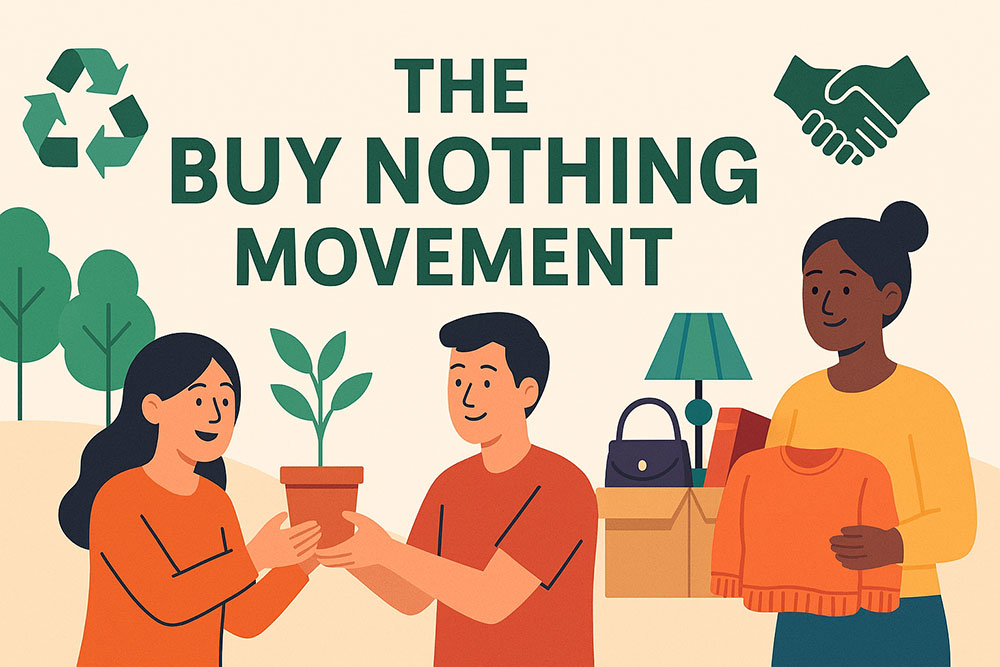
In recent years, the Buy Nothing movement has grown from a small local experiment into a global phenomenon reshaping how people think about consumption, community, and sustainability. As concerns about overconsumption, waste, and environmental impact continue to rise, more individuals are turning to alternative ways of meeting their needs — and the Buy Nothing movement has emerged as one of the most influential grassroots responses. This article explores what the movement is, where it is most popular, and why it has captured the attention of millions around the world.
What Is the Buy Nothing Movement?
The Buy Nothing movement began in 2013 on Bainbridge Island in Washington State, founded by Rebecca Rockefeller and Liesl Clark. Their idea was simple yet radical: create a hyper‑local gift economy where neighbors could give, receive, and share without spending money. Instead of buying new items, people could request what they needed from others in their community. Instead of throwing things away, they could pass them on to someone who would use them.
The movement operates primarily through Facebook groups and the BuyNothing app, where members can post items they want to give away or ask for things they need. The rules are straightforward:
- Everything must be free
- No buying, selling, or trading
- No strings attached
- Community connection is the priority
This simplicity is part of what makes the movement so powerful. It encourages generosity, reduces waste, and strengthens local relationships — all without requiring any financial exchange.
Where Is the Buy Nothing Movement Most Popular?
Although the Buy Nothing movement has spread to more than 50 countries, it is especially popular in certain regions. Its growth is closely tied to social media usage, community culture, and awareness of sustainability issues.
1. United States: The Heart of the Movement
The United States remains the most active region for the Buy Nothing movement. As the birthplace of the project, it has thousands of local groups and millions of participants. American cities and suburbs have embraced the concept, partly because of the country’s high levels of consumer waste and the growing desire for more sustainable lifestyles. In many neighborhoods, Buy Nothing groups have become essential community hubs where people share everything from baby clothes to furniture to home‑cooked meals.
2. United Kingdom: A Strong Culture of Sharing and Sustainability
The movement has also gained significant traction in the United Kingdom. British communities, especially in cities like London, Manchester, and Bristol, have adopted Buy Nothing groups as part of a broader cultural shift toward reducing waste and promoting circular economies. The UK’s strong environmental awareness and active online community networks make it an ideal environment for the movement to thrive.
3. Canada, Australia, and New Zealand: Community‑Driven Growth
These countries share cultural similarities with the United States, including high Facebook usage and strong neighborhood identities. As a result, Buy Nothing groups have flourished across Canadian provinces, Australian cities, and New Zealand towns. The emphasis on community support and sustainability aligns well with local values, making the movement a natural fit.
4. Europe: Growing Interest Across the Continent
While the movement is not equally widespread across all European countries, interest is growing rapidly. Northern and Western Europe, in particular, have embraced the concept due to their strong environmental policies and cultural openness to alternative economic models. In many European cities, Buy Nothing groups complement existing sharing initiatives such as repair cafés, freecycling networks, and community swap events.
Why Is the Buy Nothing Movement So Appealing?
The Buy Nothing movement resonates with people for several reasons, many of which reflect broader social and environmental trends.
1. Reducing Waste and Environmental Impact
One of the biggest motivations for joining a Buy Nothing group is the desire to reduce waste. Modern consumer culture encourages constant buying and upgrading, which leads to massive amounts of discarded items. By giving things a second life, the movement helps reduce landfill waste and lowers the demand for new products.
2. Saving Money in an Expensive World
With rising living costs in many countries, the ability to obtain needed items for free is a major benefit. Families can save hundreds or even thousands of dollars each year by sourcing items through their local Buy Nothing group instead of purchasing them new.
3. Building Stronger Communities
Unlike traditional online marketplaces, Buy Nothing groups emphasize connection over transaction. Members often share stories, offer help, and build relationships that extend beyond the exchange of goods. In an increasingly digital and isolated world, this sense of community is deeply valuable.
4. Encouraging Mindful Consumption
The movement challenges people to rethink their relationship with material goods. Instead of buying impulsively, members learn to ask themselves whether they truly need something — and whether someone nearby might already have it. This shift toward mindful consumption can have long‑lasting effects on personal habits and environmental impact.
Challenges and Criticisms
Despite its many benefits, the Buy Nothing movement is not without challenges. Some groups struggle with inactive members, uneven participation, or conflicts over group rules. Others face issues related to privacy, safety, or the limitations of relying on Facebook as a platform. Additionally, the movement works best in areas with high population density and active online communities, which means rural or low‑connectivity regions may not experience the same level of success.
The Future of the Buy Nothing Movement
As sustainability becomes an increasingly urgent global priority, the Buy Nothing movement is likely to continue expanding. Its model of hyper‑local sharing offers a practical, community‑driven solution to some of the biggest challenges of modern consumer culture. Whether through the official app or independent neighborhood groups, the idea of sharing instead of buying is gaining momentum — and it may play a significant role in shaping the future of consumption.