
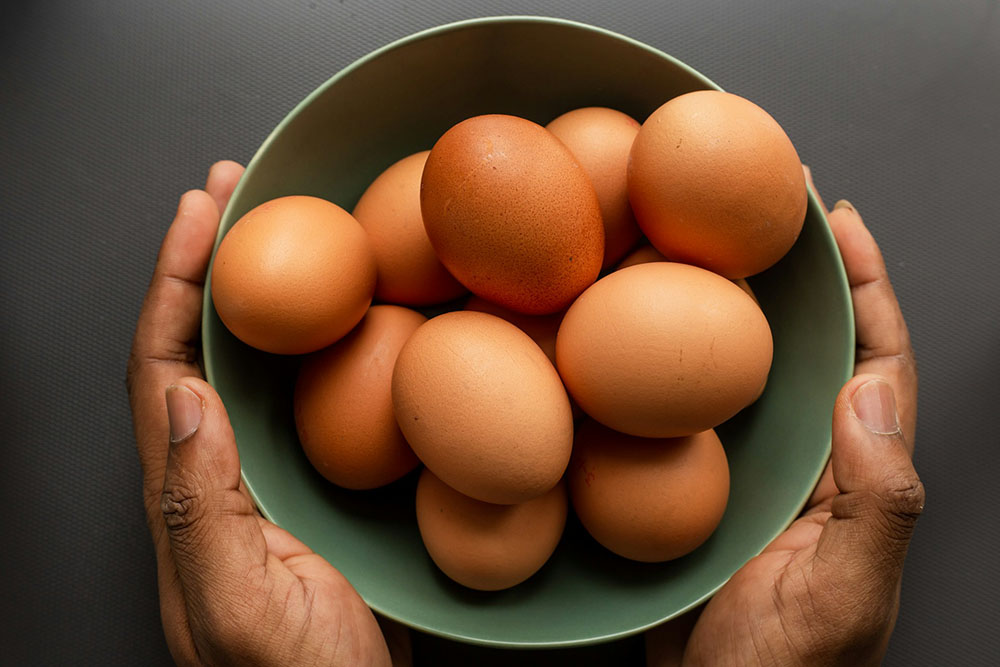
Walk into any American supermarket and you’ll find yourself staring at an entire wall of eggs. Dozens of brands, a rainbow of carton colors, and labels that sound like they were invented by a marketing team locked in a room with too much coffee: cage‑free, free‑range, pasture‑raised, organic, omega‑3 enriched, vegetarian‑fed, humanely certified. For something as simple as an egg, the buying process can feel surprisingly complicated.
But choosing good eggs doesn’t have to be a guessing game. Once you understand what the labels actually mean—and which ones matter more than others—you can walk out with a carton that fits your priorities, whether that’s freshness, flavor, animal welfare, or just getting the best value for your money.
Start With the Most Overlooked Detail: The Julian Date
Most shoppers never notice the tiny three‑digit number printed on the side of the carton. That number, known as the Julian date, is the single most reliable indicator of how fresh the eggs are. It represents the day of the year the eggs were washed and packed. For example, “001” means January 1st, while “365” means December 31st.
If you care about freshness—and you should, because fresher eggs taste better and hold their shape better when cooked—choose the carton with the highest Julian date. It’s far more accurate than “Best By” or “Sell By,” which are often set by retailers rather than farmers.
Understand USDA Grades (They’re Not About Nutrition)
Egg cartons in the U.S. often display a USDA grade: AA, A, or B. These grades have nothing to do with nutrition or safety. Instead, they describe the egg’s appearance and structure.
- Grade AA eggs have firm whites and tall, round yolks. They’re ideal for frying or poaching.
- Grade A eggs are slightly less firm but still excellent for most uses.
- Grade B eggs are rarely sold in supermarkets; they’re usually used in processed foods.
If you’re picky about presentation—say, you love a perfectly shaped sunny‑side‑up egg—go for Grade AA. Otherwise, Grade A is perfectly fine.
Decoding the Big Marketing Words: Cage‑Free, Free‑Range, Pasture‑Raised
This is where things get messy. Many shoppers assume these labels describe idyllic farms with hens roaming freely in green fields. The reality is more complicated.
- Cage‑Free simply means the hens aren’t kept in cages. They still live indoors, often in large barns, and the amount of space they have varies widely.
- Free‑Range suggests outdoor access, but the USDA doesn’t define how much outdoor space is required. In practice, it could be a small door leading to a tiny patch of dirt.
- Pasture‑Raised usually indicates the most space and the most natural lifestyle for hens, but the term isn’t regulated by the USDA. Its meaning depends on the certification behind it.
If animal welfare matters to you, look for third‑party certifications like Certified Humane or Animal Welfare Approved. These groups have clearer, stricter standards than the government.
Organic Eggs: Worth It or Just Hype?
USDA Organic eggs must come from hens fed organic feed, raised without antibiotics, and given “access to the outdoors.” That last part is vague, and many organic farms still keep hens indoors most of the time.
So are organic eggs better? It depends on what you value. If avoiding pesticides and synthetic feed is important to you, organic is a solid choice. But if you’re looking for the most humane or environmentally friendly option, organic alone doesn’t guarantee it.
Brown vs. White: The Truth Behind the Color
Many people assume brown eggs are healthier or more natural. In reality, shell color is determined by the hen’s breed. Brown eggs and white eggs have the same nutritional value. Brown eggs often cost more simply because the hens that lay them eat more.
If you prefer brown eggs, go for it. Just don’t assume they’re automatically better.
Specialty Eggs: Omega‑3, Vegetarian‑Fed, and More
You’ll also see cartons advertising omega‑3 enrichment, vegetarian feed, or “no hormones.” Some of these claims matter; others are just noise.
- Omega‑3 enriched eggs come from hens fed flaxseed or algae. They do contain more omega‑3s, though not as much as a serving of salmon.
- Vegetarian‑fed sounds wholesome, but chickens are naturally omnivores. This label mostly means the hens didn’t eat animal by‑products.
- No hormones is pure marketing. Hormones are illegal in U.S. poultry production, so every egg is hormone‑free.
Don’t Forget the Plant Code
On the carton you’ll also find a code starting with “P,” like P‑1234. This identifies the facility where the eggs were processed. It’s mainly useful for tracking recalls, but it’s also a reminder that not all eggs come from small farms—even when the packaging looks rustic.
So What Should You Actually Buy?
It depends on your priorities:
- Freshness: Choose the carton with the highest Julian date.
- Cooking quality: Grade AA for frying or poaching.
- Animal welfare: Look for “Certified Humane” or “Animal Welfare Approved.”
- Environmental or feed concerns: USDA Organic is a good baseline.
- Budget: Grade A conventional eggs are perfectly safe and nutritious.
The trick is not to be dazzled by the marketing language. Once you know what the labels really mean, the wall of egg cartons becomes a lot less intimidating.
So… Which Eggs Should You Actually Buy
Eggs are one of the simplest foods in the world, yet the modern grocery store has turned them into a surprisingly complex purchase. The good news is that you don’t need to memorize every label or buy the most expensive carton to get good eggs. A little knowledge goes a long way. Check the Julian date, understand the grading system, and choose the farming practices that align with your values. With those tools, you’ll always walk out with eggs that suit your taste, your ethics, and your budget.