
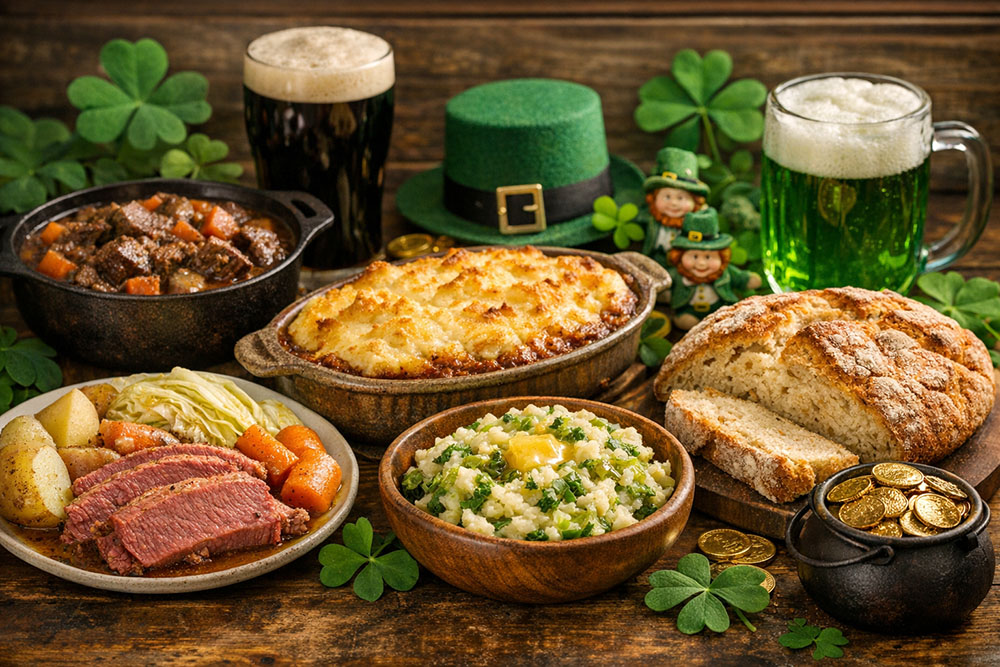
St. Patrick’s Day, celebrated every year on March 17, is one of the most iconic cultural festivals originating from Ireland. While the day honors St. Patrick, the patron saint of Ireland, it has grown into a global celebration of Irish heritage, featuring parades, music, dancing, and—of course—food. Traditional St. Patrick’s Day dishes reflect Ireland’s agricultural roots, simple cooking methods, and hearty flavors. Today, these foods are enjoyed not only in Ireland but also in countries with large Irish communities, such as the United States, the United Kingdom, Canada, and Australia. This article introduces the most popular St. Patrick’s Day foods and provides simple steps for preparing them at home.
Corned Beef and Cabbage
Although many people associate corned beef and cabbage with Ireland, the dish actually became popular among Irish immigrants in America. In the 19th century, beef was expensive in Ireland, but in the United States, corned beef was affordable and widely available. Irish immigrants paired it with cabbage, one of the cheapest vegetables, creating a dish that eventually became a St. Patrick’s Day classic.
Simple Steps to Make Corned Beef and Cabbage:
- Place a corned beef brisket in a large pot and cover it with water.
- Add spices such as peppercorns, bay leaves, and garlic.
- Simmer for 2–3 hours until the meat becomes tender.
- Add chopped cabbage, carrots, and potatoes.
- Cook for another 20–30 minutes until the vegetables soften.
- Slice the beef and serve with the vegetables and broth.
Irish Soda Bread
Irish soda bread is one of the most traditional foods associated with Irish culture. It is a simple, rustic bread made without yeast. Instead, baking soda reacts with buttermilk to create a quick rise. The bread has a dense texture and slightly tangy flavor, making it perfect alongside soups, stews, or butter.
Simple Steps to Make Irish Soda Bread:
- Mix flour, baking soda, salt, and sugar in a bowl.
- Add buttermilk and stir until a dough forms.
- Shape the dough into a round loaf and cut a cross on top.
- Bake at 200°C for about 40 minutes until golden brown.
- Cool slightly before slicing.
Shepherd’s Pie
Shepherd’s Pie is a comforting dish made with minced lamb, vegetables, and mashed potatoes. Although it is eaten year-round, it becomes especially popular during St. Patrick’s Day because it represents traditional Irish home cooking.
Simple Steps to Make Shepherd’s Pie:
- Sauté minced lamb with onions, carrots, and peas.
- Add tomato paste, Worcestershire sauce, salt, and pepper.
- Spread the mixture in a baking dish.
- Top with creamy mashed potatoes.
- Bake at 190°C for 25–30 minutes until the top is golden.
Colcannon
Colcannon is a beloved Irish side dish made from mashed potatoes mixed with cabbage or kale. It is creamy, buttery, and incredibly satisfying. Many families enjoy it during St. Patrick’s Day as a symbol of Irish comfort food.
Simple Steps to Make Colcannon:
- Boil potatoes until soft and mash them with butter and milk.
- Sauté chopped cabbage or kale until tender.
- Mix the greens into the mashed potatoes.
- Season with salt, pepper, and a bit of green onion.
Guinness Beef Stew
Guinness, the famous Irish stout, is often used in cooking to add depth and richness to stews. Guinness Beef Stew is a hearty dish perfect for cold March weather and is commonly served in Irish pubs during the holiday.
Simple Steps to Make Guinness Beef Stew:
- Brown beef chunks in a pot.
- Add onions, carrots, and celery.
- Pour in a bottle of Guinness and some beef broth.
- Add thyme, bay leaves, salt, and pepper.
- Simmer for 2–3 hours until the beef becomes tender.
- Serve with mashed potatoes or soda bread.
Bringing Irish Flavor to Your Celebration
St. Patrick’s Day is more than a celebration of Irish identity—it is also a feast of traditional flavors that reflect the history and culture of Ireland. Whether you prefer the hearty richness of Guinness Beef Stew, the comforting simplicity of Irish Soda Bread, or the festive classic of Corned Beef and Cabbage, these dishes bring people together in the spirit of warmth and celebration. With the simple steps provided above, anyone can prepare these foods at home and enjoy an authentic taste of St. Patrick’s Day.