
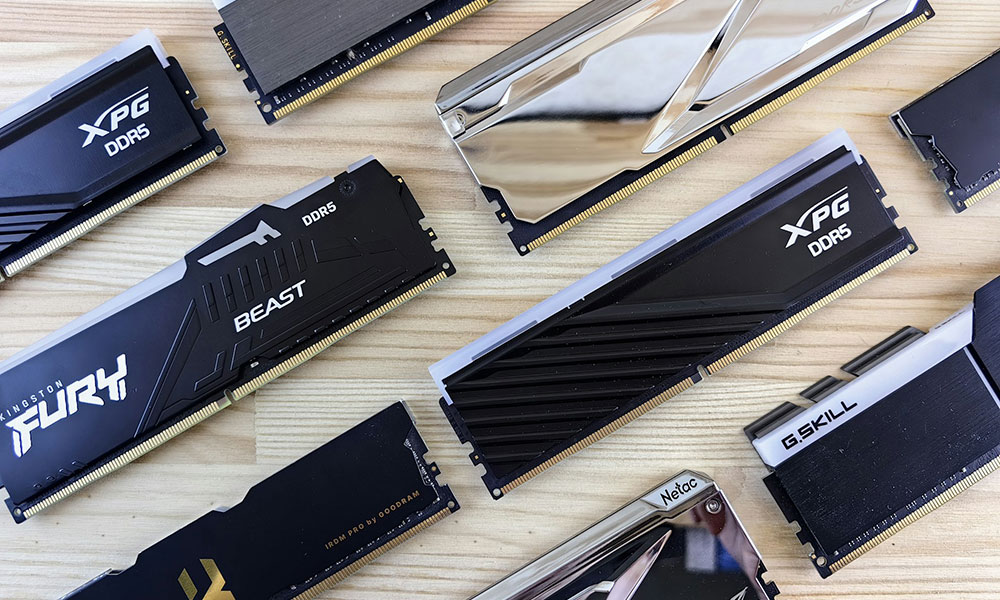
Over the past two years, the global memory market has undergone one of the most dramatic price surges in its history. From consumer‑grade DDR4 and DDR5 modules to enterprise‑level DRAM and high‑bandwidth memory (HBM), prices have risen sharply across nearly every segment. What initially appeared to be a temporary supply imbalance has now evolved into a structural, industry‑wide transformation driven by the explosive growth of artificial intelligence, shifting manufacturing priorities, and long‑term capacity constraints. Understanding this phenomenon requires examining not only the immediate causes but also the deeper forces shaping the semiconductor landscape.
AI as the Primary Catalyst
The single most important factor behind the current price surge is the unprecedented demand for memory in AI data centers. Modern AI training and inference workloads rely heavily on high‑performance memory, especially HBM and DDR5. Large language models, recommendation systems, and cloud‑scale inference engines require massive memory bandwidth and capacity. As a result, companies like NVIDIA, Google, Microsoft, and Amazon have aggressively secured long‑term supply contracts with memory manufacturers.
This has created a “crowding‑out effect,” where AI‑related demand absorbs a disproportionate share of available production capacity. Memory manufacturers such as Samsung, SK Hynix, and Micron have responded by reallocating their fabrication lines toward high‑margin HBM and advanced DRAM nodes. While this shift is profitable for the manufacturers, it has significantly reduced the supply of consumer‑grade memory, especially DDR4 and lower‑tier DDR5.
Manufacturing Constraints and Limited Expansion
Another major contributor to rising prices is the limited expansion of semiconductor manufacturing capacity. Building a new DRAM or HBM fabrication plant requires billions of dollars and several years of construction, equipment installation, and process tuning. Even when companies announce new facilities, these fabs typically do not begin mass production until three to five years later.
In the meantime, existing fabs are being optimized for advanced memory types rather than legacy products. DDR4 production, for example, has been intentionally reduced as manufacturers phase out older nodes. This has caused DDR4 prices to rise far more sharply than DDR5, despite DDR4 being a mature technology. In some markets, DDR4 module prices have more than doubled compared to their 2023 levels.
The Shift Toward DDR5 and HBM
The industry is also undergoing a generational transition from DDR4 to DDR5. While DDR5 adoption in consumer PCs has been gradual, enterprise and server markets have moved rapidly toward DDR5‑based platforms. This shift has increased demand for DDR5 at a time when supply is still constrained by the prioritization of HBM production.
HBM, in particular, has become the crown jewel of the memory industry. Its extremely high bandwidth makes it indispensable for AI accelerators, GPUs, and advanced computing systems. However, HBM manufacturing is complex, involving 3D stacking, through‑silicon vias (TSVs), and precise packaging steps. Yields are lower, production cycles are longer, and only a handful of companies can produce it at scale. As a result, HBM shortages have cascaded into shortages of other memory types.
Market Behavior and Pricing Dynamics
The memory market is historically cyclical, characterized by alternating periods of oversupply and undersupply. However, the current cycle is unusual because the demand surge is structural rather than temporary. AI adoption is accelerating, not slowing down. Cloud providers are expanding their GPU clusters. Consumer devices are integrating more memory. Even automotive and industrial sectors are increasing their DRAM requirements.
This sustained demand has pushed memory prices to multi‑year highs. Analysts expect DRAM and NAND prices to remain elevated throughout 2025 and 2026, with some segments potentially experiencing additional increases. DDR4, in particular, is likely to continue rising as production winds down. DDR5 may stabilize sooner, but only after new capacity comes online.
Future Outlook: When Will Prices Fall?
Most industry forecasts suggest that meaningful price relief will not arrive until 2027 or 2028. Several factors support this timeline: new fabs announced in 2024–2025 will not reach full production until late 2027; AI demand is expected to grow exponentially, absorbing any incremental supply; HBM shortages will persist due to manufacturing complexity; and manufacturers have little incentive to increase low‑margin DDR4 production. In short, the memory market is unlikely to return to the low‑price environment of the late 2010s anytime soon.
As the market continues to evolve, it becomes increasingly important for consumers and enterprises to make informed decisions. The long‑term decline of DDR4 production means that prices for older platforms are unlikely to reverse, and those who still rely on DDR4‑based systems may find it more economical to upgrade sooner rather than later. DDR5, while not immune to price fluctuations, offers a more stable trajectory and will remain the mainstream standard for years to come. For PC builders, securing memory early in the build cycle can help avoid future price spikes, while enterprises may benefit from negotiating longer‑term supply agreements to reduce volatility in server‑grade DRAM procurement.
Ultimately, the global memory market is being reshaped by forces far larger than the consumer PC industry. AI infrastructure, cloud computing, and advanced semiconductor technologies are driving a new era of demand that will keep pressure on supply chains for the foreseeable future. Navigating this environment requires both awareness and timing: understanding where the market is heading, and acting before the next wave of price increases arrives.
How Will Rising Global Memory Prices Affect Your Upgrade Plans?