
Most people have experienced the same frustrating scenario.
A group of friends is trying to decide where to eat.
A family is discussing vacation plans.
A community organizer needs to choose an event date.
A manager wants quick feedback from a team.
The conversation begins with enthusiasm. Messages start flowing. Suggestions appear. Opinions multiply.
Then something unexpected happens.
Nobody actually makes a decision.
More communication doesn't necessarily create more clarity.
In many cases, it creates the opposite.
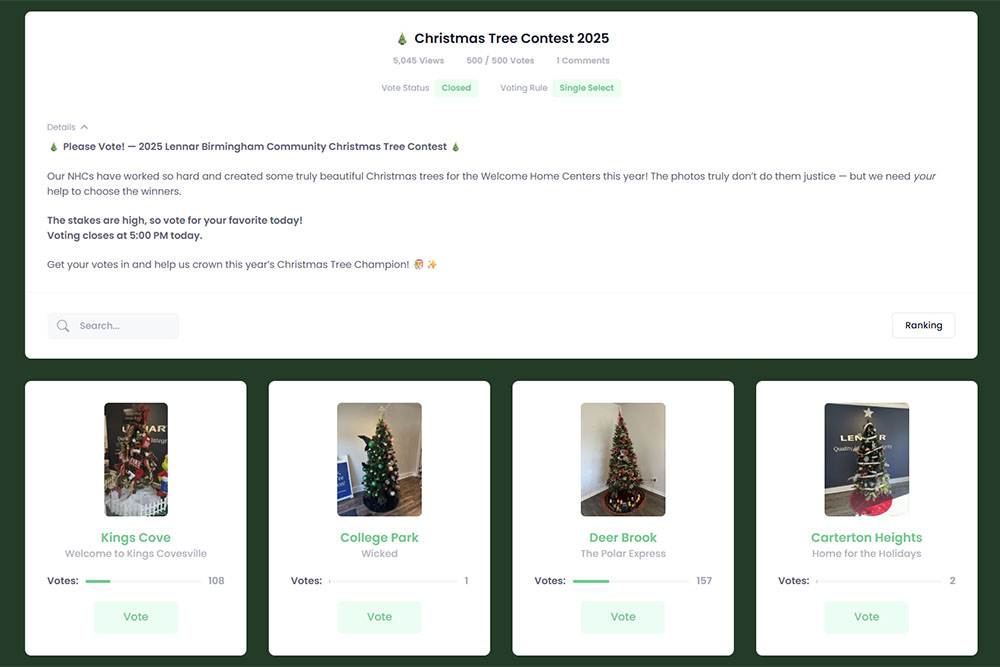
That's one reason free online voting tools have quietly become part of everyday life. What was once associated almost exclusively with elections and formal organizations is now helping people make decisions in situations far removed from traditional voting booths.
Group Chats Aren't Always Great for Decisions
Messaging apps are excellent communication tools.
They help people:
- Share ideas
- Exchange information
- Coordinate activities
- Stay connected
But they aren't always ideal decision-making tools.
Anyone who's participated in a busy group chat knows how quickly important messages can disappear.
One person wants Italian food.
Someone else prefers sushi.
Another person joins the conversation three hours later and suggests something completely different.
Before long, dozens of messages have accumulated, yet no clear conclusion has emerged.
The challenge isn't communication.
The challenge is organization.
A voting tool introduces something that many conversations lack:
A clear way to measure preferences.
Everyday Voting Has Quietly Gone Mainstream
For a long time, the word "voting" felt formal.
People associated it with:
- Political elections
- Board member elections
- School councils
- Organizational governance
Today, voting happens in far more situations.
People create votes to decide:
- Travel destinations
- Event dates
- Team activities
- Product preferences
- Club decisions
- Restaurant choices
- Community initiatives
In many cases, the vote itself takes less than a minute.
What once required endless discussion can now be resolved with a simple poll.
The shift isn't dramatic.
It's practical.
Why Free Matters More Than People Think
When discussing free online voting tools, many people immediately think about money.
Cost certainly plays a role.
But free tools reduce more than financial barriers.
They reduce friction.
A useful voting tool should be accessible the moment it's needed.
People don't want a complicated setup process for a simple decision.
They don't want lengthy onboarding.
They don't want to spend thirty minutes creating a poll for a question that takes thirty seconds to answer.
Free platforms lower the threshold for participation.
As a result, people are more willing to use them for everyday situations rather than reserving them exclusively for major events.
Participation Matters Almost as Much as the Outcome
One of the most overlooked benefits of voting is psychological rather than technical.
People like feeling included.
In many situations, the actual result matters less than having the opportunity to contribute.
Consider a family planning a vacation.
Not everyone will get their first choice.
However, people tend to feel more positive about the final decision when they've been part of the process.
The same principle appears in workplaces, clubs, schools, and communities.
Participation creates engagement.
Engagement creates buy-in.
And buy-in often leads to smoother decisions.
Small Decisions Add Up
Many people underestimate how much time is spent making small decisions.
Individually, they seem insignificant:
- Which day should we meet?
- Which movie should we watch?
- Which design do we prefer?
- What should we order for lunch?
Yet these tiny decisions occur constantly.
The cumulative effect can be surprisingly large.
Without a clear process, discussions can drag on much longer than necessary.
A quick vote often provides enough direction to move forward.
The goal isn't making every decision democratic.
The goal is making routine decisions less frustrating.
Simplicity Usually Wins
In an age of increasingly complex software, simplicity often becomes a competitive advantage.
Most people aren't looking for sophisticated election systems when choosing a movie night or planning a community gathering.
They simply want something that works.
The most successful voting tools tend to share a few characteristics:
- Easy to create
- Easy to share
- Easy to understand
- Easy to participate in
Anything that complicates those steps creates friction.
And friction discourages participation.
That's one reason lightweight platforms such as MiniVote continue to attract attention. For many everyday scenarios, users don't need enterprise-level election software. They simply need a fast and reliable way to collect opinions and reach a decision.
Decisions Happen Everywhere
Decision-making is no longer confined to boardrooms or ballot boxes.
It happens continuously throughout daily life.
Friends decide where to meet.
Families decide where to travel.
Communities decide which events to host.
Teams decide which projects to prioritize.
As digital communication continues to evolve, people are discovering that collecting opinions doesn't have to be complicated.
Often, the simplest solution is simply asking everyone to vote.
Decisions Shouldn't Be Harder Than They Need to Be
Modern life offers more ways to communicate than ever before.
We can send messages instantly, hold video calls across continents, and participate in discussions at any time of day.
Yet communication alone doesn't always create decisions.
Sometimes it creates noise.
The growing popularity of free online voting tools reflects a simple reality:
People want a straightforward way to understand what others think.
Whether it's organizing a community event, settling a group debate, or choosing next weekend's destination, voting has become something much bigger than elections.
It's becoming a practical tool for everyday life.
And in a world filled with conversations, sometimes the fastest path to a decision is simply letting everyone have a vote.