
For decades, the word voting carried a very specific image.
Election booths.
Ballots.
Campaigns.
Political debates.
Most people associated voting with governments, public offices, and major civic decisions.
Today, that picture is changing.
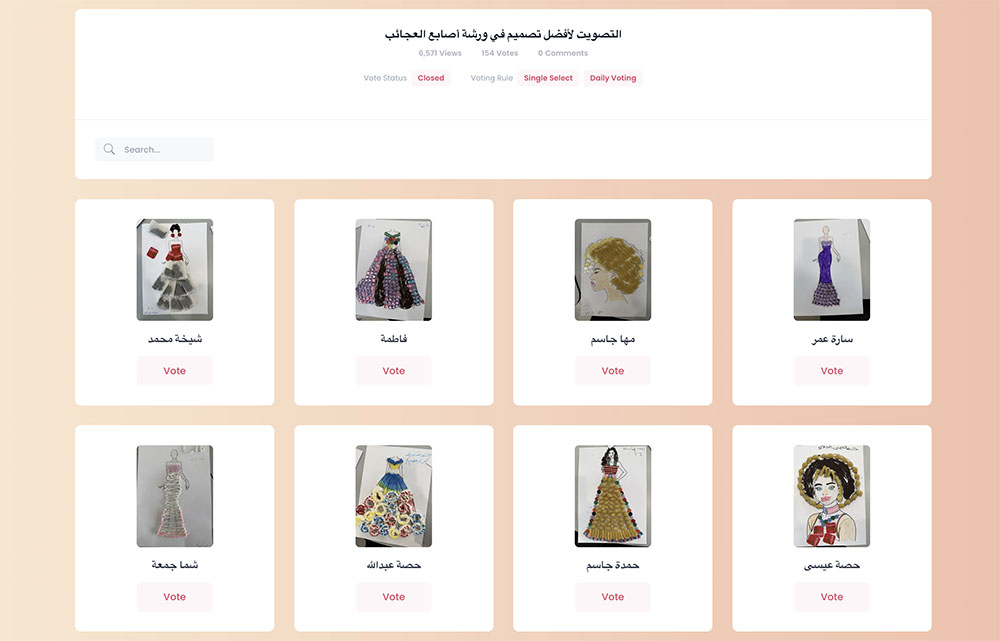
In communities, workplaces, schools, clubs, and even families, voting has become an everyday tool for making decisions. What was once reserved for formal elections is now helping people answer surprisingly ordinary questions:
Where should we go for dinner?
Which date works best for an event?
What feature should be built next?
Which destination should we visit on our next trip?
The rise of free online voting tools is quietly transforming how groups make decisions, and in many cases, making those decisions far easier.
The Group Chat Problem Everyone Knows
Modern communication has never been easier.
We have messaging apps, social networks, video calls, and countless ways to stay connected.
Yet communication doesn't always lead to decisions.
A simple question posted in a group chat often turns into dozens of messages:
Someone suggests one option.
Another person disagrees.
A third person joins hours later with a completely different idea.
Half the group doesn't respond at all.
Eventually, nobody knows what the final answer actually is.
What started as a quick decision becomes an endless discussion.
The issue isn't a lack of communication.
It's a lack of structure.
Not Every Decision Needs a Meeting
Many organizations face a similar problem.
A small team wants feedback.
A volunteer group needs to pick a date.
A school club needs to choose an activity.
The traditional solution is often another meeting.
But meetings consume time.
People's schedules rarely align perfectly.
And sometimes the decision itself is too simple to justify gathering everyone together.
Voting creates a shortcut.
Instead of scheduling another conversation, participants can quickly express their preferences and move forward.
Everyday Decisions Deserve Participation Too
One reason online voting tools have become more popular is that people increasingly expect to have a voice.
This doesn't mean every decision should be democratic.
But it does mean that participation matters.
When people feel included in a process, they are often more supportive of the final outcome, even when their preferred option doesn't win.
Consider a group planning a vacation.
No destination will satisfy everyone perfectly.
Yet allowing everyone to vote often creates a stronger sense of involvement and fairness.
The same principle applies in workplaces, communities, and social groups.
Why Free Tools Have Changed the Equation
In the past, voting software was frequently associated with formal organizations.
It felt technical.
Sometimes expensive.
Often unnecessary for smaller groups.
Free online voting tools changed that perception.
When creating a vote requires only a few minutes, people begin using voting in situations where they would never have considered it before.
Suddenly, voting becomes practical for:
- Community events
- Family decisions
- Student groups
- Book clubs
- Sports teams
- Friend groups
- Small businesses
The barrier to entry becomes so low that voting feels as natural as sending a message.
Transparency Reduces Friction
One of the biggest challenges in group decision-making is uncertainty.
People often wonder:
- Have enough people responded?
- Which option is winning?
- Is everyone being heard?
- Did someone make the final decision without telling us?
Voting introduces transparency.
Everyone can see that opinions have been collected.
The process feels more deliberate.
The outcome feels easier to accept.
Even when the result isn't unanimous, the path to arriving there is usually much clearer.
Small Decisions Add Up
Many people underestimate how much time is spent making relatively minor decisions.
Choosing a meeting time.
Selecting an event location.
Picking a theme for a community gathering.
Voting on a feature request.
Individually, these choices seem small.
Collectively, they can consume an enormous amount of attention.
The ability to gather opinions quickly helps groups spend less time debating and more time acting.
In that sense, online voting is often more about efficiency than democracy.
Simplicity Wins More Often Than Complexity
One interesting trend in digital tools is that users increasingly value simplicity.
Most people don't need advanced election software for everyday decisions.
They don't want lengthy setup processes or complicated administrative controls.
They simply want a straightforward way to ask a question, collect responses, and reach a conclusion.
That's one reason lightweight platforms such as MiniVote continue to attract users. For many situations, people aren't looking for enterprise-level voting systems. They're looking for an easy way to understand what a group actually wants.
Voting Has Become a Communication Tool
Perhaps the biggest shift is conceptual.
Voting is no longer viewed only as a method for selecting leaders or passing resolutions.
It's becoming a communication tool.
A way to collect opinions.
A way to measure preferences.
A way to turn discussion into action.
In many cases, the vote itself is not the goal.
The goal is helping people move forward together.
Decisions Shouldn't Be Harder Than They Need to Be
We live in a world filled with communication tools.
Yet communication alone doesn't always create clarity.
Sometimes it creates more noise.
The growing popularity of free online voting tools reflects a simple reality:
People want an easier way to make decisions.
Whether it's choosing a travel destination, planning a community event, gathering customer feedback, or settling a long-running group debate, voting is no longer confined to election day.
It's becoming part of everyday life.
And for many groups, that's exactly where it belongs.