
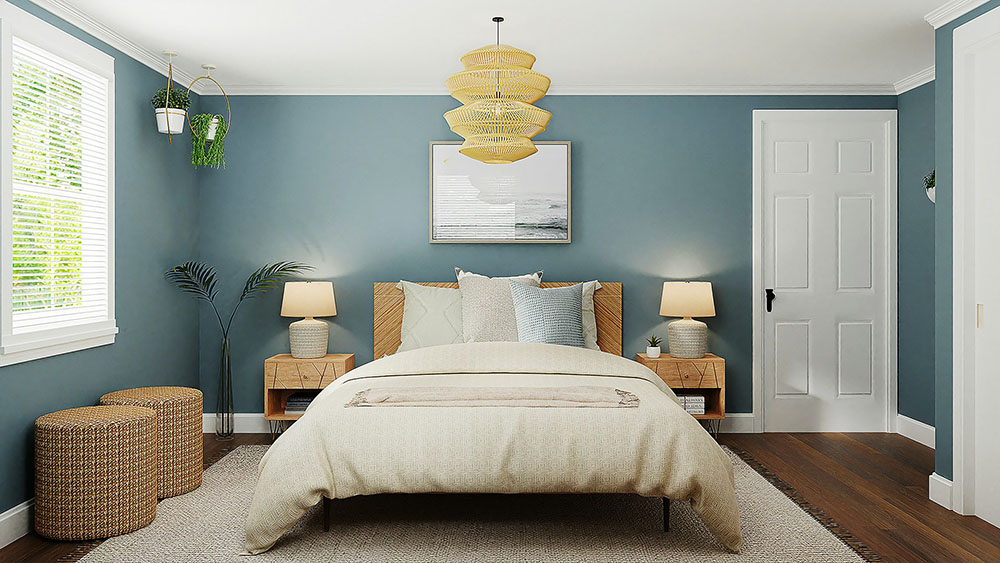
Your bedroom doesn't need to look like a luxury hotel to feel peaceful. Sometimes, a few small changes—a better bed position, softer lighting, less clutter, or simply moving a mirror—can make the room feel noticeably more comfortable.
Feng Shui, the traditional Chinese practice of arranging living spaces to create balance and harmony, offers plenty of ideas for the bedroom. Not every Feng Shui principle has a scientific explanation, and you don't have to follow every traditional rule to appreciate the philosophy behind it. Many of its suggestions also happen to overlap with modern ideas about creating a calm, comfortable space for rest.
If your bedroom feels a little chaotic or never quite feels relaxing, these seven Feng Shui-inspired ideas are worth trying.
1. Give Your Bed a Solid Backing
One of the most familiar Feng Shui ideas is to place the head of the bed against a solid wall.
Traditionally, a solid wall behind the bed is associated with stability and a sense of support. From a practical interior-design perspective, the arrangement also tends to make a bed feel more anchored within the room.
If possible, avoid placing the head of the bed directly beneath a large window. Windows can create drafts, outside noise, changing light, and other distractions that aren't always ideal for a sleeping area.
Of course, not every bedroom gives you much choice. In a small apartment or awkwardly shaped room, practicality should come first.
The goal isn't to create a perfect Feng Shui layout. It's to make the bed feel like the natural center of the room.
2. Keep the Door in Your Line of Sight
Traditional Feng Shui often recommends positioning the bed so that you can see the bedroom door while lying down, without placing the bed directly in line with it.
This is sometimes called the “command position.”
The traditional explanation relates to awareness and a sense of security. From a modern perspective, there is also something intuitively comfortable about being able to see the entrance without having the door dominate your view.
If your room doesn't allow the ideal arrangement, don't worry. You can work with what you have. Even shifting the bed slightly so that the doorway is visible may change the way the room feels.
3. Give Clutter Less Room to Take Over
This might be the easiest Feng Shui principle to apply—and one of the most useful regardless of whether you believe in Feng Shui.
A chair covered in clothes, shoes scattered across the floor, unopened packages on a dresser, and a nightstand buried under chargers can make a bedroom feel busier than it needs to be.
Feng Shui traditionally places importance on the movement of “qi,” or energy, through a space. Modern design doesn't need that concept to make a similar observation: visual clutter can make a room feel less calm.
You don't need to become a minimalist.
Start with the surfaces you see from your bed. Clear the nightstand, put away clothes, and remove things that don't belong in the bedroom. The room may feel different before you've changed a single piece of furniture.
4. Be Thoughtful About Mirrors
A mirror facing the bed is one of the best-known Feng Shui bedroom concerns.
Traditional interpretations vary, but many Feng Shui practitioners recommend avoiding a mirror positioned directly opposite the bed.
Whether you take the traditional explanation seriously or not, there is a practical reason you might prefer to move it. A mirror can reflect headlights, morning sunlight, movement, or other visual activity, which may make some people feel less relaxed at night.
If you enjoy having a large bedroom mirror, consider placing it where it doesn't directly face the bed. You can still have the convenience without making the mirror the first thing you see when you're trying to wind down.
5. Create Balance on Both Sides of the Bed
A pair of bedside tables is more than a decorating convention.
In Feng Shui, symmetry and balance are often associated with harmony. Two similar nightstands and lamps can give a bedroom a more balanced appearance and make the bed feel visually grounded.
They don't have to be identical.
If one person needs more storage space than the other, different-sized nightstands can work perfectly well. What matters is that both sides have enough room for the things people actually use.
Even in a bedroom shared by two people, small signs of balance can make the space feel more intentional.
6. Keep the Bedroom's Lighting Gentle
Bright overhead lighting may be useful when you're cleaning, getting dressed, or searching for something under the bed. It isn't necessarily the best choice when you're trying to relax.
Feng Shui-inspired bedroom design often favors softer, warmer lighting that creates a calmer atmosphere.
Try using bedside lamps or other adjustable light sources in the evening instead of relying entirely on a bright ceiling fixture.
You can also make the room more comfortable by using curtains or blinds that give you control over outside light.
The idea is simple: your bedroom should be able to transition from an active space into a quieter one as the evening progresses.
7. Be Careful With What You Keep Beside the Bed
The area immediately around your bed has an outsized effect on how the room feels.
Think about what you see during the last few minutes before sleeping and the first few minutes after waking up.
A pile of bills, a laptop, work documents, or a phone surrounded by notifications can make the bedroom feel like an extension of the office.
Instead, try keeping the area relatively simple.
A book, a glass of water, a small lamp, or something decorative that you genuinely enjoy may be enough. If possible, give work-related objects and unnecessary electronics a different home.
This isn't about following a strict Feng Shui rule. It's about creating a visual boundary between being productive and being at rest.
You Don't Have to Follow Every Feng Shui Rule
One of the easiest mistakes when exploring Feng Shui is becoming overly focused on rules.
What direction should the bed face? Which color is lucky? Where exactly should a plant go?
Different schools of Feng Shui can offer different answers, and the advice you find online isn't always consistent.
Instead of trying to make your bedroom “perfect,” think about the broader principles behind the practice: balance, simplicity, comfortable movement, and a feeling of stability.
If one traditional recommendation makes your bedroom more comfortable, use it.
If another makes the room less practical, there's no reason to force it.
Your bedroom still needs to work as a real bedroom.
A Calmer Bedroom Doesn't Require a Complete Makeover
You don't need new furniture, expensive decorations, or a designer to make your bedroom feel better.
Start with the bed. Make sure it feels anchored and comfortable. Clear some visual clutter. Adjust the lighting. Move a mirror if its reflection bothers you. Keep the area around the bed simple and give yourself enough space to move around comfortably.
These changes may be inspired by Feng Shui, but they can also be understood simply as good room design.
Perhaps that's why Feng Shui continues to attract interest outside China. You don't have to accept every traditional belief to appreciate the basic idea that the spaces around us can influence how a place feels.
A bedroom should ultimately give you somewhere to slow down.
If walking into the room makes you feel calmer rather than reminding you of everything you still need to do, you've probably already achieved the most important part.
What Would You Change First to Make Your Bedroom More Relaxing?