
For many visitors and newcomers, the United States can feel like a land of unwritten rules—especially when it comes to tipping. While tipping exists in many countries, the American approach is uniquely strong, deeply rooted in cultural expectations and economic structures. In the U.S., tipping is not just a polite gesture; in many service industries, it is a major part of workers’ income. Understanding when to tip, when it’s optional, and when it’s unnecessary can help you navigate daily life more confidently and avoid awkward social moments.
This article breaks down the essentials of American tipping culture, offering practical examples and explaining the potential consequences of not tipping in situations where it is expected.
Why Tipping Is So Common in the U.S.
Unlike many countries where service workers receive a stable salary, many American service employees—especially restaurant servers—are paid a very low base wage. In some states, the minimum wage for tipped workers can be as low as a few dollars per hour. Tips are meant to make up the difference. Because of this system, tipping has become a social expectation rather than a bonus.
For Americans, tipping is seen as a way to acknowledge service quality, support workers, and participate in a shared cultural norm. For visitors, however, the rules can feel confusing. Fortunately, the guidelines are consistent once you understand the categories.
Situations Where You Should Tip
These are the scenarios where tipping is not only expected but considered standard practice. Failing to tip in these situations is often viewed as rude or disrespectful.
1. Sit‑Down Restaurants
This is the most important tipping category in the U.S.
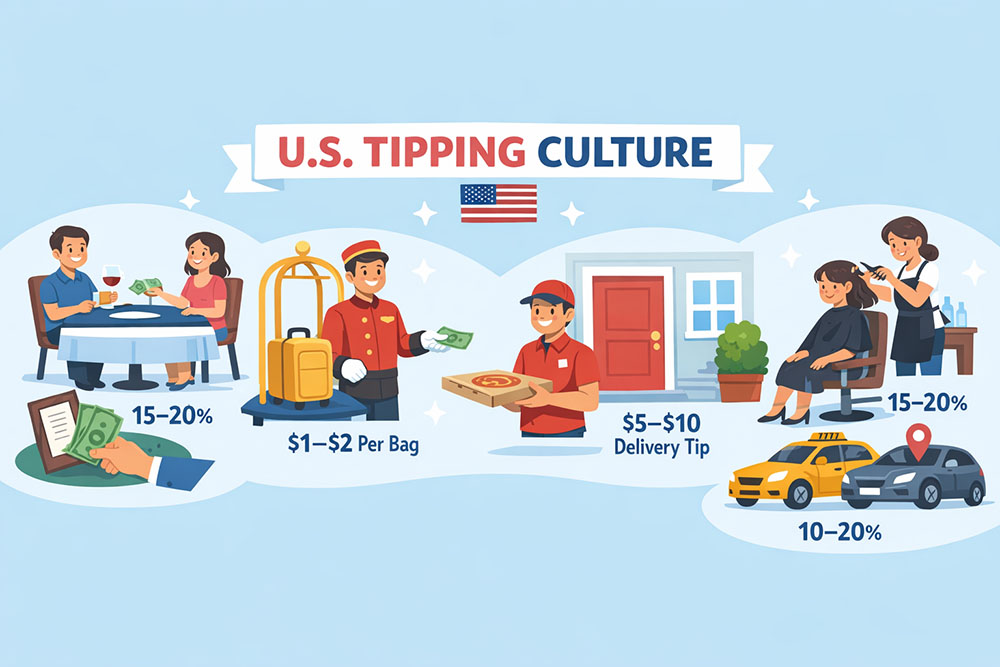
- Standard tip: 15–20% of the pre‑tax bill
- Exceptional service: 20–25%
- Large groups: Some restaurants automatically add a gratuity of 18–20%
Not tipping in a restaurant is interpreted as a strong statement that the service was extremely poor. In many cases, servers may even approach you to confirm whether something was wrong.
2. Bars
Bartenders typically expect:
- $1–$2 per drink, or
- 15–20% of the total bill
3. Haircuts, Nail Salons, and Personal Services
These workers rely heavily on tips.
- Typical tip: 15–20%
4. Taxis, Uber, and Lyft
While not legally required, tipping is standard.
- Typical tip: 10–20%
5. Hotel Services
- Bellhop: $1–$2 per bag
- Housekeeping: $2–$5 per night
- Valet parking: $2–$5 when your car is returned
6. Food Delivery
For pizza delivery, courier services, or flower delivery:
- Typical tip: $5–$10 or 10–15% of the order
- More during bad weather or long distances
Situations Where Tipping Is Not Expected
These are places where tipping is not part of the culture. If you try to tip, workers may even decline.
1. Supermarkets and Grocery Stores
Cashiers, baggers, and stockers do not expect tips.
2. Retail Stores
Clothing shops, electronics stores, and department stores do not accept tips.
3. Government Services
Post offices, DMV offices, and other public agencies do not allow tipping.
4. Medical and Professional Services
Doctors, nurses, lawyers, accountants, and teachers do not accept tips.
5. Public Transportation
Bus drivers, subway staff, and train conductors do not receive tips.
Situations Where Tipping Is Optional
These are gray areas where tipping is appreciated but not required. Whether you tip depends on the situation, the quality of service, and your personal preference.
1. Coffee Shops and Fast‑Casual Restaurants
You may see a digital screen prompting you to leave a tip.
- Optional tip: $1–$2 or 10%
- Many Americans skip the tip unless the service is personalized or the staff goes above and beyond.
2. Takeout Orders
If you pick up your own food, tipping is optional.
- Some people leave $1–$3 for large or complicated orders.
3. Flower Delivery
Tipping is polite but not mandatory.
- Common tip: $5–$10
- More if the driver carries heavy arrangements or delivers in bad weather.
4. Furniture or Appliance Delivery
Optional, but appreciated if the workers carry heavy items or assemble furniture.
- Typical tip: $10–$20 per person
5. Hotel Concierge
Optional unless they provide special assistance, such as booking hard‑to‑get reservations.
- Typical tip: $5–$20 depending on the task
What Happens If You Don’t Tip?
The consequences vary depending on the situation.
1. In Restaurants
This is where the strongest reaction occurs.
- Staff may assume you were unhappy with the service.
- You may be remembered if you return.
- In rare cases, a server might politely ask if something was wrong.
2. In Bars or Personal Services
You may receive less friendly service next time, especially if you are a regular customer.
3. In Optional Tipping Situations
Nothing significant happens. Workers may appreciate a tip, but they won’t expect it.
4. In Non‑Tipping Environments
There are no consequences because tipping is not part of the culture.
5. Social Perception
Among Americans, consistently not tipping in expected situations can create the impression that someone is inconsiderate or unfamiliar with social norms. While not illegal, it can affect how people perceive you.
What This Means for Everyday Life
Tipping in the United States is more than a financial gesture—it is a cultural expectation shaped by the structure of the service industry. Understanding when to tip, when it’s optional, and when it’s unnecessary can help you navigate American society with confidence. While the system may feel unfamiliar at first, following these guidelines will help you avoid misunderstandings and show respect for the workers who rely on tips as part of their livelihood.