
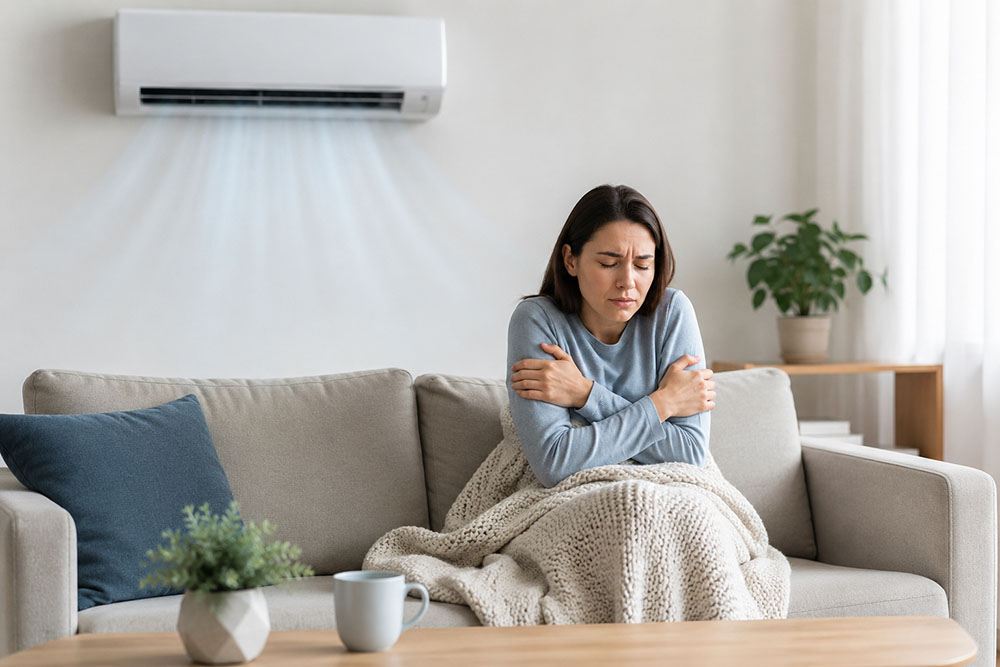
Air conditioning makes hot summer days far more comfortable, especially during heat waves. It helps reduce the risk of heat-related illness, improves indoor comfort, and allows people to sleep, work, and exercise more safely when outdoor temperatures soar.
But spending long hours in air-conditioned spaces isn't always without drawbacks.
If you've ever walked out of an office with a stiff neck, woken up with a dry throat after sleeping under the AC, or wondered why your skin suddenly feels itchy during the summer, your air conditioner may be playing a role. That doesn't mean air conditioning is unhealthy. More often, it's the way it's used—or maintained—that contributes to these everyday complaints.
Here are seven signs that your air conditioner could be affecting your comfort and well-being.
1. Your Eyes Feel Dry or Irritated
One of the first things many people notice after spending hours in an air-conditioned room is dry, tired eyes.
Air conditioners reduce indoor humidity, which can cause moisture on the surface of your eyes to evaporate more quickly. People who wear contact lenses often notice this even sooner, especially after a full day in an office or during a long flight.
Blinking more often, using lubricating eye drops when recommended, and taking regular breaks from screens may help reduce discomfort.
2. Your Skin Feels Tight or Itchy
The same dry indoor air that affects your eyes can also affect your skin.
When humidity drops, your skin loses moisture more easily, leaving it feeling rough, tight, or itchy. People who already have naturally dry skin or conditions such as eczema may notice symptoms becoming more noticeable during long periods in air-conditioned environments.
Applying a moisturizer after showering and staying hydrated can help your skin retain moisture throughout the day.
3. You Wake Up With a Dry Throat
Sleeping with the air conditioner running isn't necessarily a problem, but very cool, dry air can sometimes leave your throat feeling dry or scratchy by morning.
This is especially common if cool air blows directly toward your bed or if you tend to breathe through your mouth while sleeping.
Adjusting the airflow away from your face and choosing a moderate overnight temperature may help reduce this problem.
4. Your Neck or Shoulders Feel Stiff
Cold air blowing continuously onto the same part of your body can make muscles feel tight or uncomfortable.
Office workers often experience this when an overhead vent points directly toward their desk for hours at a time. While air conditioning itself doesn't cause joint disease, prolonged exposure to cold airflow may contribute to muscle tension or make existing stiffness feel more noticeable.
Changing your seating position or redirecting the airflow can often make a significant difference.
5. You Develop Frequent Headaches
Headaches can have many causes, including dehydration, stress, lack of sleep, and prolonged screen time.
However, spending all day in a cool, dry environment may contribute for some people, particularly if they aren't drinking enough water or frequently move between very hot outdoor temperatures and cold indoor spaces.
Maintaining a comfortable indoor temperature instead of setting the thermostat excessively low may help your body adjust more easily throughout the day.
6. Your Allergies Seem Worse Indoors
Air conditioners don't usually cause allergies, but poorly maintained systems can circulate dust, pollen, mold spores, and other airborne particles.
If you notice sneezing, itchy eyes, nasal congestion, or coughing mainly while indoors, it may be worth checking when the air filter was last cleaned or replaced.
Regular maintenance improves not only air quality but also the efficiency of the cooling system.
7. You Feel Tired Even After Staying Cool
Many people assume feeling cool automatically means feeling refreshed. Surprisingly, that isn't always the case.
If an indoor space is much colder than necessary, your body may spend extra energy adjusting to the temperature. Combined with dry air, long hours of sitting, and limited fresh air circulation, this can leave some people feeling sluggish by the end of the day.
Sometimes, simply raising the thermostat a degree or two and taking short breaks outdoors can improve overall comfort.
Small Adjustments Can Make a Big Difference
Air conditioning remains one of the best ways to stay safe during periods of extreme heat, and for many people it's an essential part of daily life throughout the summer.
The goal isn't to avoid using it—it's to use it wisely.
Keeping your system clean, replacing filters regularly, avoiding direct airflow, staying hydrated, and maintaining a comfortable indoor temperature can all help reduce common discomforts without sacrificing the cooling benefits.
If your symptoms are persistent, severe, or don't improve after making these adjustments, it's important to speak with a healthcare professional, as they may have causes unrelated to air conditioning.
For most people, a well-maintained air conditioner is a source of comfort, not a health risk. A few thoughtful changes are often all it takes to enjoy a cooler home without feeling uncomfortable afterward.
What's the Most Common Problem You Notice After Spending Hours in Air Conditioning?