
Game‑based learning has transformed the way children discover programming. Instead of starting with textbooks or syntax drills, kids today learn by exploring virtual worlds, solving puzzles, and creating their own games. This playful approach not only builds technical skills but also nurtures creativity, problem‑solving, and confidence. Below is an in‑depth look at some of the most engaging coding‑through‑gaming applications that have captured the imagination of young learners. Each platform offers a unique blend of fun and education, making coding feel like an adventure rather than a chore.
Scratch: Where Creativity Meets Code
Scratch, created by the MIT Media Lab, is one of the most influential platforms for introducing children to programming. Its drag‑and‑drop interface allows kids to build animations, games, and interactive stories by snapping together colorful code blocks.
What makes Scratch exceptional is its emphasis on creativity. Children can design characters, compose music, and craft narratives—all while learning core programming concepts like loops, events, and conditionals. The platform also features a massive online community where kids share projects, remix others’ work, and collaborate globally. This social ecosystem turns coding into a creative movement rather than a solitary task.
Roblox Studio: Turning Players Into Creators
Roblox Studio empowers kids to build their own 3D games using the Lua programming language. Many children already spend hours exploring Roblox worlds; Roblox Studio lets them step behind the curtain and become creators themselves.
The platform encourages experimentation and entrepreneurship. Young developers can design obstacle courses, simulators, role‑playing games, and more. Some even earn real income from their creations. Beyond coding, kids learn game design, digital art, and collaboration—skills that extend far beyond the screen.
Minecraft Education: Coding Inside a Beloved Sandbox
Minecraft Education transforms the iconic block‑building game into a powerful learning environment. Children can use Microsoft MakeCode or Python to automate tasks, build structures, and solve in‑game challenges.
What sets this platform apart is its interdisciplinary nature. Kids learn coding alongside math, chemistry, architecture, and environmental science. Teachers often use it to create immersive lessons where students program agents, run simulations, and collaborate in shared virtual worlds. It’s a perfect blend of creativity, exploration, and computational thinking.
CodeCombat: Adventure‑Driven Python Learning
CodeCombat offers a fantasy RPG experience where players control characters by writing real code. Instead of clicking to move or attack, kids type Python or JavaScript commands to navigate dungeons, defeat enemies, and solve puzzles.
This approach is ideal for older children ready to transition from block‑based coding to text‑based programming. The game rewards strategic thinking and experimentation, making it both challenging and deeply engaging.
Tynker: A Complete Path From Blocks to Real Code
Tynker provides a structured, game‑like curriculum for children aged 5–14. Its lessons feature space missions, dragons, robots, and creative challenges that keep kids motivated.
Tynker stands out for its progression system. Kids begin with visual coding and gradually move into Python, JavaScript, and even robotics programming. Many schools adopt Tynker because it balances fun with academic depth, making it a strong foundation for long‑term STEM learning.
Lightbot: Puzzle‑Based Logic Training
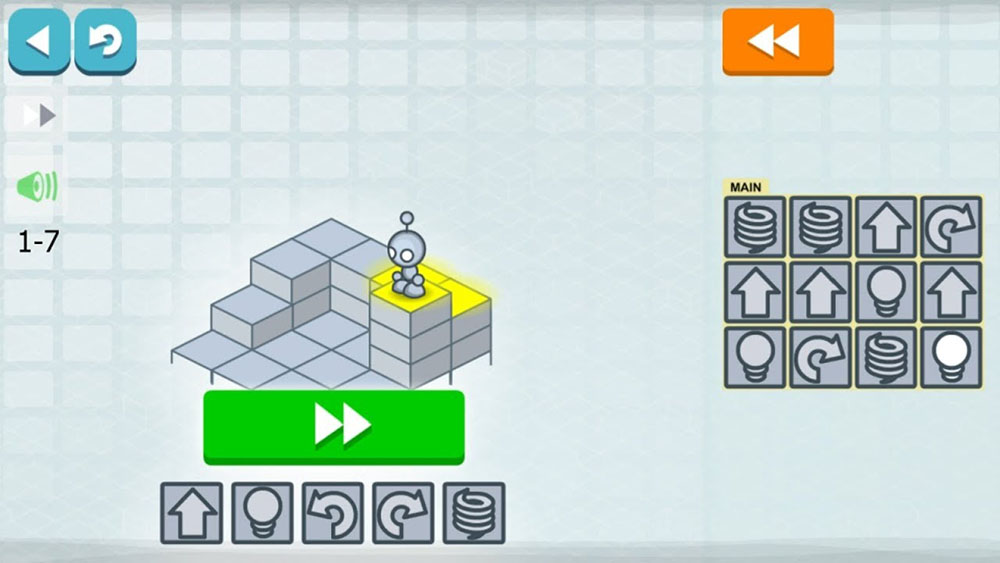
Lightbot is a deceptively simple puzzle game that teaches sequencing, loops, and functions. Kids guide a robot through levels by arranging commands in the correct order.
Though minimalistic, Lightbot is incredibly effective at building computational thinking. It’s especially suitable for younger learners who benefit from visual, hands‑on problem‑solving before moving on to more complex coding environments.
Kodable: Coding for Early Learners
Kodable is designed for children as young as four. With bright visuals and maze‑based challenges, it introduces logic, patterns, and sequencing in a playful, intuitive way.
One of Kodable’s strengths is accessibility—kids don’t need reading skills to get started. As they progress, they transition from visual commands to writing simple JavaScript, making it a gentle introduction to real programming.
RoboGarden: Coding Meets STEM Adventure
RoboGarden offers mission‑based adventures where children complete tasks by writing code. The platform integrates STEM topics such as math, robotics, and environmental science, giving kids a broader understanding of how coding connects to the real world.
Its structured progression and real‑world themes make it a favorite among educators who want coding lessons to feel meaningful and practical.
Why Game‑Based Coding Works
These platforms succeed because they combine three essential elements:
- Playfulness — Kids stay engaged because learning feels like gaming.
- Creativity — Many apps let children build worlds, stories, or full games.
- Progression — Students naturally move from visual blocks to real programming languages.
By blending fun with foundational skills, these apps turn coding into a form of expression—something kids want to do, not something they feel obligated to learn.
Which Coding‑Through‑Gaming App Do You Think Helps Kids Learn Best?