
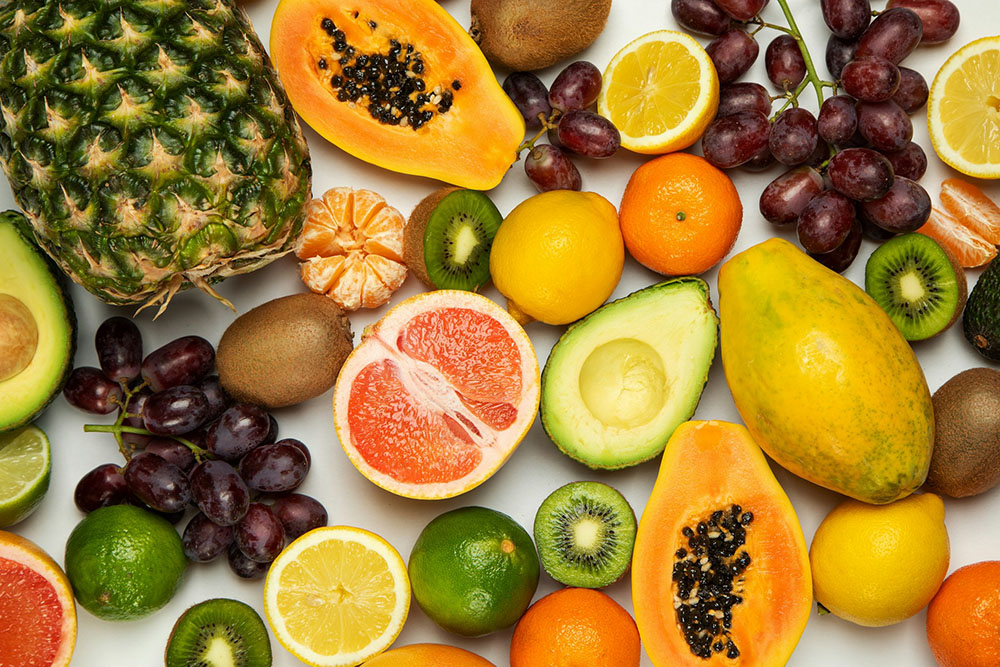
Natural sugars aren't the whole story. Fiber, water content, and portion size all play a role in how fruit affects blood sugar. Here's a practical guide to ten fruits that can fit into a blood-sugar-conscious lifestyle.
Fruit often gets blamed when people start paying attention to blood sugar.
After all, fruit contains sugar. But that's only part of the picture.
Unlike candy, soda, or many processed snacks, whole fruits also contain fiber, water, vitamins, minerals, and beneficial plant compounds. These nutrients can slow digestion and help reduce sharp blood sugar spikes.
That doesn't mean all fruits are identical. Some contain significantly less sugar than others, while some provide much more fiber per serving.
If you're trying to make smarter snack choices, here are ten fruits worth knowing about.
1. Raspberries
Nutrition (per 100g)
- Sugar: ~4.4g
- Fiber: ~6.5g
Raspberries are one of the most blood-sugar-friendly fruits available.
Their sugar content is surprisingly low, while their fiber content is exceptionally high. This combination helps slow the absorption of carbohydrates and can improve satiety.
For people looking for a sweet snack without a large sugar load, raspberries are hard to beat.
2. Strawberries
Nutrition (per 100g)
- Sugar: ~4.9g
- Fiber: ~2g
Many people assume strawberries contain a lot of sugar because they taste sweet.
In reality, strawberries contain less sugar than many common fruits and are mostly water.
They're also versatile, making them easy to add to yogurt, oatmeal, or smoothies.
3. Blackberries
Nutrition (per 100g)
- Sugar: ~4.9g
- Fiber: ~5.3g
Blackberries combine low sugar levels with excellent fiber content.
Like raspberries, they can satisfy a sweet craving while providing nutrients that support fullness.
The biggest drawback is often availability and cost rather than nutrition.
4. Kiwi
Nutrition (per 100g)
- Sugar: ~9g
- Fiber: ~3g
Kiwi is often overlooked despite offering a strong nutritional profile.
It provides vitamin C, fiber, and a moderate amount of natural sugar. Its balance of sweetness and nutrition makes it a popular choice among dietitians.
A single kiwi can also be a refreshing alternative to processed desserts.
5. Apples
Nutrition (per 100g)
- Sugar: ~10g
- Fiber: ~2.4g
Apples have earned their healthy reputation for a reason.
They're affordable, widely available, and relatively filling.
Much of an apple's fiber is found in the skin, so eating the whole fruit is usually a better choice than peeled slices or juice.
6. Pears
Nutrition (per 100g)
- Sugar: ~10g
- Fiber: ~3g
Pears don't receive the attention that apples do, but they're equally worthy of a place in a healthy diet.
Their fiber content is slightly higher than many people expect, which can contribute to feelings of fullness after eating.
If you're trying to reduce unhealthy snacking, pears can be a surprisingly satisfying option.
7. Oranges
Nutrition (per 100g)
- Sugar: ~9g
- Fiber: ~2.4g
Oranges demonstrate why whole fruit and fruit juice should not be viewed as the same thing.
Whole oranges contain fiber that slows digestion and increases fullness.
Orange juice, on the other hand, removes much of that fiber and makes it easier to consume the equivalent of several oranges in a matter of minutes.
8. Blueberries
Nutrition (per 100g)
- Sugar: ~10g
- Fiber: ~2.4g
Blueberries are frequently described as a "superfood."
While they're not the lowest-sugar fruit on this list, they contain anthocyanins, the plant compounds responsible for their deep blue color.
They're also convenient, portable, and easy to incorporate into daily meals.
9. Grapes
Nutrition (per 100g)
- Sugar: ~15g
- Fiber: ~1g
Grapes are nutritious, but they deserve a special mention because portion control can be difficult.
Most people don't eat just a few grapes.
It's easy to consume a large quantity without realizing it, which can significantly increase total sugar intake.
That doesn't make grapes unhealthy. It simply means serving size matters more than many people think.
10. Bananas
Nutrition (per 100g)
- Sugar: ~12g
- Fiber: ~2.6g
Bananas are one of the most misunderstood fruits.
Some people avoid them entirely because they contain more sugar than berries.
However, bananas also provide potassium, fiber, and excellent convenience. They're filling, portable, and widely available.
For most healthy individuals, bananas can absolutely be part of a balanced diet.
What About Watermelon, Pineapple, and Mango?
These fruits often get labeled as "too sugary," but the reality is more nuanced.
Watermelon contains a lot of water and relatively little sugar by weight, though it's easy to eat large portions.
Pineapple and mango contain more natural sugar than berries, but they also provide valuable nutrients.
The key isn't necessarily avoiding them.
The key is being mindful of portion size and overall dietary patterns.
What Matters More Than Any Ranking
It's tempting to search for the "perfect" fruit.
But nutrition rarely works that way.
The difference between an apple and a pear is usually much smaller than the difference between an apple and a package of cookies.
In most cases:
✅ Whole fruit is a better choice than sugary drinks.
✅ Whole fruit is a better choice than most processed snacks.
✅ Consistency matters more than perfection.
Instead of asking which fruit has the absolute lowest sugar content, it may be more useful to ask:
Which healthy fruit do you enjoy enough to eat regularly?
That's often the choice that's easiest to maintain over the long term.
If You Could Only Keep One Fruit in Your Kitchen, Which Would You Choose?